

AI powered search engines are becoming a major part of how we find information online. Not all searches give the same results, some feel just right, while others leave you scrolling for answers. Something is changing behind the scenes that could make finding what you need faster and more accurate. What is it, and how will it affect the way we search and discover information online? This guide will explore what AI powered search engines are and how they could change the way we search and discover information.
Table of Contents
What Are AI Powered Search Engines?
AI powered search engines leverage artificial intelligence technologies like natural language processing (NLP), machine learning, and semantic search. This allows them to go beyond simple keyword matching and understand the meaning behind queries. For instance, if a customer searches for “best running shoes for flat feet,” an AI search engine can analyse patterns, reviews, and user preferences to deliver results tailored to that specific need.
Key Features
- Contextual Understanding: Interprets the meaning behind user queries.
- Personalisation: Offers search results based on user behaviour and preferences.
- Predictive Analytics: Anticipates user needs and suggests relevant results.
- Visual and Voice Search: Supports images, videos, and voice-based queries for richer experiences.
Traditional Search Engines: How They Work
Traditional search engines rely primarily on algorithms that index and rank web pages based on keywords, backlinks, and metadata. The goal is to match the exact terms users type into the search bar. While effective for general queries, this method can struggle with complex questions, vague searches, or context-sensitive requests.
Limitations of Traditional Search
- Limited Understanding of Intent: Results may not match the user’s actual needs.
- Dependence on Keywords: Pages with strong SEO but low relevance may rank higher.
- Slow Adaptation: Harder to respond to trends or dynamic user preferences.
Key Differences Between AI Powered Search Engines and Traditional Search
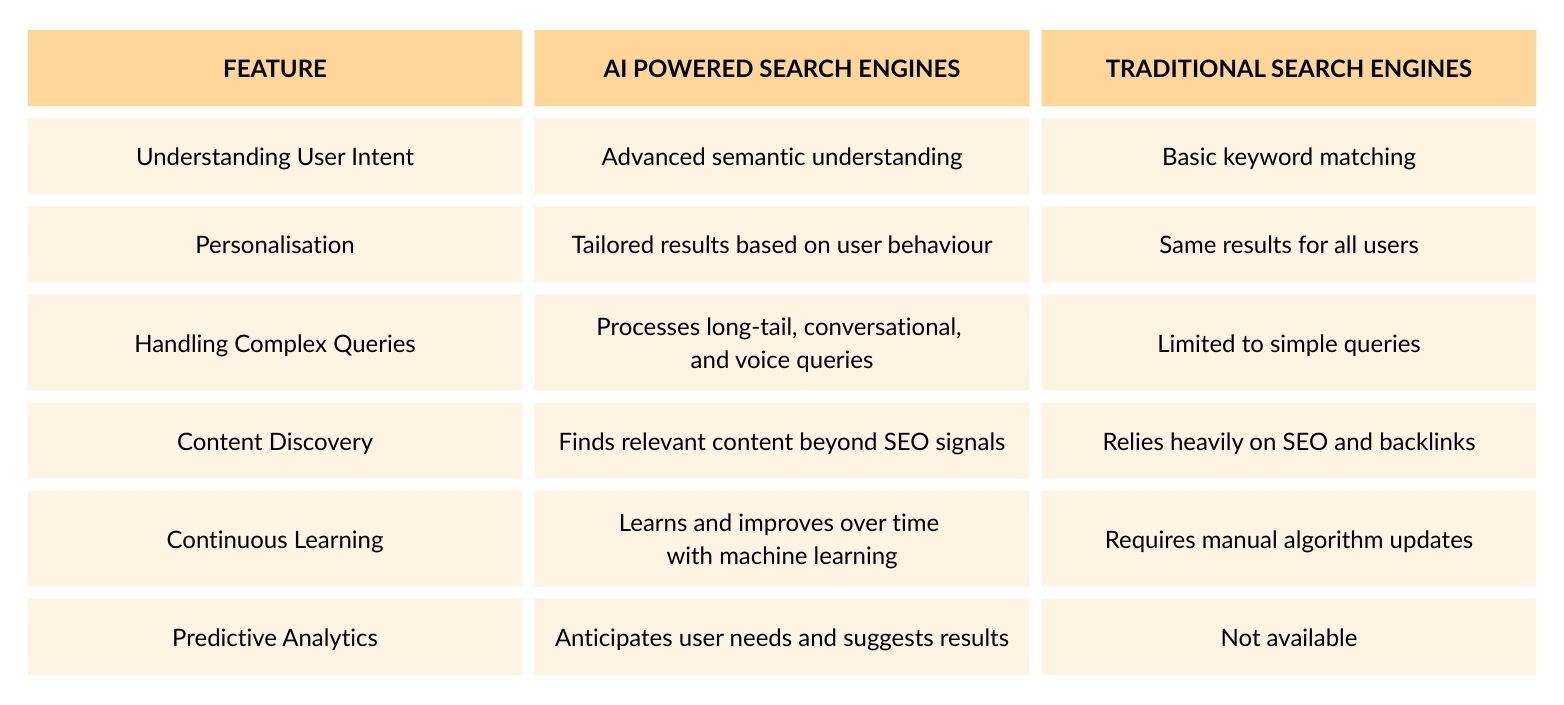
1. Understanding User Intent
Traditional search focuses on keywords. AI search interprets intent, context, and semantics. This means users find answers more quickly, and businesses can target content more effectively.
2. Personalisation and Predictive Results
AI powered search engines adapt based on user behaviour, past searches, and engagement patterns. Traditional search provides the same results for all users.
3. Handling Complex Queries
Complex or conversational queries are challenging for traditional engines. AI engines can process long-tail searches, voice inputs, and multi-part questions, delivering precise answers.
4. Content Discovery
AI search can uncover relevant content that may not have strong SEO signals but offers real value. Traditional search heavily relies on backlinks and keyword optimisation.
5. Continuous Learning
AI engines continuously improve through machine learning, while traditional search requires manual algorithm updates and adjustments.
Comparison Table: AI Powered vs Traditional Search
Benefits of AI Powered Search Engines for Businesses
1. Enhanced User Experience
AI powered search engines allow users to find relevant products or information faster, reducing frustration and improving satisfaction with every interaction.
2. Increased Conversions
Personalised search results guide customers to products or content that closely match their needs, leading to higher purchase intent and more completed sales.
3. Better Insights
Businesses can gather detailed analytics from AI search interactions, uncovering trends, preferences, and behaviour patterns to inform marketing and product strategies.
4. Reduced Bounce Rates
By delivering highly relevant results, AI search keeps users engaged on your site longer, decreasing the likelihood they leave without taking action.
5. Competitive Advantage
Adopting AI powered search early can position your business as forward-thinking, improving user experience and helping you stay ahead of competitors.
Real-World Examples of AI Search in Action
Several companies are already leveraging AI powered search engines:
- Amazon: Uses AI to predict customer preferences, recommend products, and personalise search results.
- Spotify: Suggests playlists and songs based on listening habits using AI-driven search algorithms.
- Google: Implements AI in features like “Google Discover” and “People Also Ask” to provide more contextual answers.
These examples demonstrate how AI search improves engagement and drives revenue.
Future Trends in AI Search Technology
Voice and Visual Search Expansion
AI engines are increasingly able to process voice commands and visual inputs such as images and videos. This means users can simply speak their queries or upload photos to find what they need, making searches faster and more intuitive, especially on mobile devices.
Conversational AI
The integration of chatbots and virtual assistants with AI search engines is creating more interactive and natural search experiences. Users can ask follow-up questions or refine searches in a conversational way, helping them find precise answers without multiple searches.
Enhanced Predictive Analytics
AI is improving at predicting user behaviour and anticipating trends. By analysing previous searches, click patterns, and engagement data, AI can suggest relevant products or information before users even know they need it. This proactive approach is especially useful for personalisation and targeted marketing.
Integration with E-commerce Platforms
Online retailers are increasingly using AI powered search engines to deliver real-time product recommendations and smarter search features. This integration allows customers to discover products based on their preferences, browsing history, and even seasonal trends, creating a more engaging and efficient shopping experience.
Conclusion
AI powered search engines are changing how people find information online. Instead of matching only keywords, they understand intent, learn user behaviour, and deliver personalised results that feel faster and more accurate. Shoppers get what they want with fewer searches, and stores gain better engagement, conversions, and insights. With advances in voice, visual, and predictive search, adopting AI powered search is becoming essential for any business that wants to connect users with the right content at the right time.
Boost Your E-commerce with 5MS Magento Services
- By 5ms