
Your online ecommerce store may be attracting traffic, but if sales are stagnant, something is preventing visitors from converting into customers. High traffic alone does not guarantee growth. Many e-commerce owners assume more clicks automatically lead to higher revenue, but without the right strategies, even thousands of visitors might leave without making a purchase. Understanding why your store isn’t turning visits into sales is key to boosting revenue, improving customer engagement, and building long-term loyalty.
Understanding Your Online Ecommerce Store’s Growth Challenges
Even the most effective traffic campaigns cannot compensate for a store experience that fails to meet customer expectations. Common growth barriers include slow website speed, confusing navigation, poorly designed product pages, or a checkout process that frustrates users. Additionally, marketing efforts may attract irrelevant visitors, leading to a high bounce rate. To address these challenges, business owners must analyse both user behaviour and website functionality carefully.
Key Signs Your Store Has Growth Issues:
- Low conversion rate despite high traffic
- High cart abandonment
- Short average session duration
- Negative feedback or complaints about usability
Is Your Website User-Friendly?
A seamless browsing experience is essential for turning visitors into buyers. If users struggle to navigate or interact with your site, they will quickly leave. Focus on:
- Mobile optimisation: Over 70% of ecommerce traffic comes from mobile devices. Your store must look and function perfectly on all screen sizes.
- Fast loading speed: Pages should load within 3 seconds. Slow sites discourage users and impact SEO rankings.
- Clear navigation: Categories, search bars, and filters must be intuitive, helping visitors find products without frustration.
- Consistent design: Fonts, colours, and layouts should be visually appealing and consistent across the site.
Example:
Amazon’s mobile site demonstrates how simplicity and speed drive conversions. Clear categories and prominent search functionality make it easy for users to find products, reducing bounce rates and increasing sales.
Are You Targeting the Right Audience?
Traffic volume alone does not guarantee sales if the audience does not match your ideal customer profile. Your marketing campaigns need to attract people genuinely interested in your products. Achieve this by:
- Creating detailed buyer personas: Define age, location, preferences, and shopping behaviour.
- Tailoring ad campaigns and content: Match messaging and visuals to audience interests.
- Analysing social media insights: Discover what content resonates and adjust targeting accordingly.
Tip:
Use tools like Google Analytics, Facebook Audience Insights, and Hotjar to refine your targeting and understand user intent. For instance, analysing which pages have the highest drop-off can reveal whether your messaging aligns with visitor expectations.
Product Pages and Descriptions That Convert
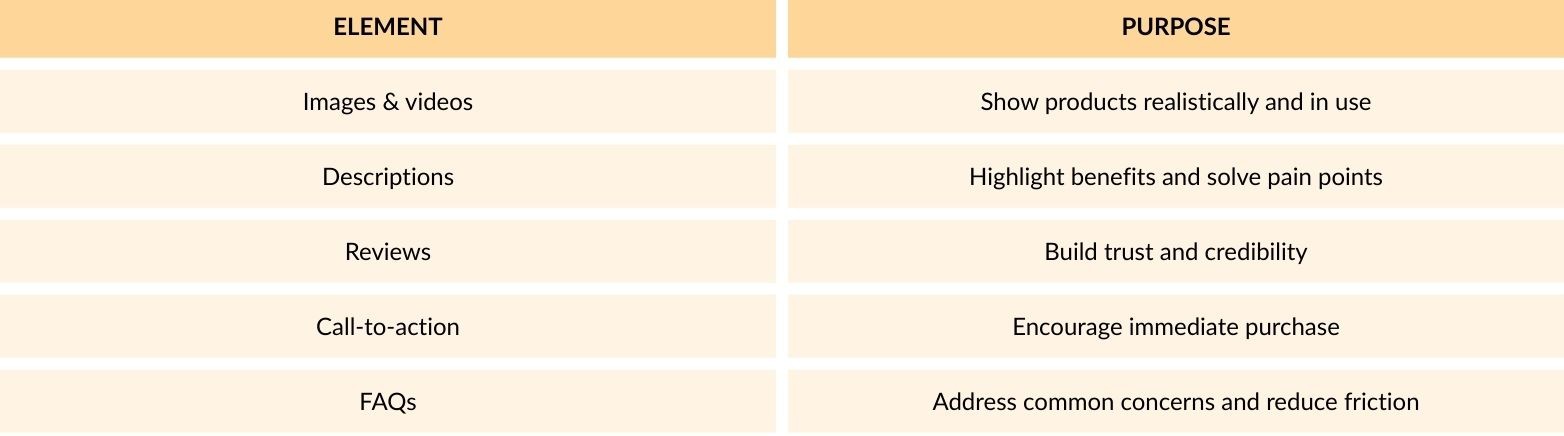
Your product pages are critical for turning curiosity into purchases. They must quickly answer questions, show value, and build desire. Focus on:
- High-quality images and videos: Show products in multiple angles and realistic settings.
- Detailed descriptions: Focus on benefits over features, explaining how the product solves a problem.
- Customer reviews and ratings: Provide social proof and reassurance.
- Clear call-to-action (CTA): Encourage immediate purchase or add to cart.
Table: High-Converting Product Page Elements
The Role of Trust and Social Proof
Online shoppers often hesitate to buy from unfamiliar stores. Building trust is essential to increasing conversions. Implement:
- Customer reviews: Positive reviews reassure new buyers.
- Case studies or testimonials: Show real-world results and experiences.
- Recognisable payment icons: Make buyers feel secure.
- Clear return policies: Reduce perceived risk and improve confidence.
- Trust badges and certifications: Highlight security and credibility.
Example:
Etsy displays seller ratings and customer reviews prominently, encouraging buyers to trust the platform and make informed purchase decisions.
Checkout Process: Friction is Costly
A complicated or lengthy checkout can drastically reduce conversions. Simplify your process by:
- Minimising form fields to only essential information
- Offering multiple payment options including PayPal, Apple Pay, and credit cards
- Enabling guest checkout without requiring account creation
- Displaying a clear progress indicator showing steps to completion
- Providing reassurance messages about security and delivery
Statistic:
According to the Baymard Institute, 69% of online shopping carts are abandoned, often due to unnecessary friction or confusing checkout flows.
Marketing Strategy Gaps
Even with good traffic, marketing strategies may fail to drive conversions. Ensure your campaigns address all stages of the buyer journey:
- Email remarketing for abandoned carts: Remind users of products they left behind.
- Retargeting ads: Bring back visitors who explored but didn’t purchase.
- Personalised recommendations: Suggest complementary or similar products.
- Limited-time promotions and discounts: Encourage urgency and incentivise purchase.
- Content marketing: Provide valuable guides or tips that align with your products, building trust and authority.
Tracking and Analytics for Ecommerce Growth
Without proper tracking, identifying and fixing growth issues is impossible. Focus on:
- Google Analytics with ecommerce tracking: Monitor traffic sources, conversion rates, and behaviour.
- Conversion rate, bounce rate, and average order value: Key metrics that reveal where improvements are needed.
- A/B testing landing pages, product descriptions, and CTAs: Experiment to find what resonates best with your audience.
- Customer journey analysis: Understand the complete path from first visit to purchase.
Tip:
Set up goals in Google Analytics to measure conversions from different traffic sources and campaigns. This helps pinpoint which marketing efforts are truly driving revenue.
Conclusion
An online ecommerce store can receive high traffic yet struggle to grow if key elements like user experience, product pages, trust signals, checkout processes, or marketing strategies are underperforming. Regular analysis, optimisation, and targeted campaigns can transform visits into loyal customers and boost revenue. Focus on refining product pages, enhancing user experience, personalising marketing, and tracking performance metrics to achieve sustainable ecommerce growth.