

The Magento market is growing fast, with more and more retailers choosing Magento to run their online shops. Businesses today want platforms that are flexible, easy to scale, and ready for the future, and Magento continues to deliver on all of these needs.
What makes this year stand out is how much the Magento ecosystem has developed. New tools, better integrations, and smarter features are opening fresh opportunities for companies of every size. This article explores how the Magento market is changing, highlights new opportunities for businesses, and shows how to plan for long-term growth.
Table of Contents
What is the Magento Market?
The Magento market is the global ecosystem built around the Magento platform. It brings together different groups that make the platform stronger, including:
- Retailers running Magento-powered online shops.
- Agencies such as 5MS Magento specialists that provide design, development, and support.
- Extension developers who create add-ons for payments, shipping, SEO, and other features.
- Adobe Commerce users, the enterprise edition of Magento for larger operations.

It is a fast-growing digital economy supported by constant innovation, strong partnerships, and an active global community. According to Adobe, thousands of medium to large ecommerce brands depend on Magento to run powerful, high-performing online stores.
Why the Magento Market Matters for Ecommerce Growth Here
It gives businesses the building blocks for sustainable digital growth. Unlike simpler platforms, Magento allows you to tailor your store exactly how you want it.
Top growth drivers within the Magento market:
- Unlimited customisation for unique designs and functions.
- Enterprise scalability for handling seasonal peaks and large catalogues.
- Strong SEO capabilities to rank higher on Google.
- Community-driven innovation that constantly evolves with new trends.
For a retailer looking to grow, the Magento market offers both the stability of Adobe-backed technology and the flexibility of open-source development.
Key Magento Market Trends
The Magento market is moving fast as customer expectations rise and new technology takes centre stage. Below are the key trends that are driving growth this year.
1. Personalisation and AI-driven shopping
AI has become a standard part of ecommerce. In the Magento market, AI-driven personalisation is changing how shoppers browse, interact, and buy online.
Examples of AI in Magento stores:
- Product recommendations based on browsing history.
- Personalised promotions and loyalty rewards.
- AI-powered search that predicts intent.
2. B2B expansion opportunities
Magento’s B2B features are a standout reason why the Magento market is booming. Businesses can now serve wholesale buyers with the same ease as retail customers.
B2B features include:
- Bulk ordering systems.
- Tiered pricing and discounts.
- Customer-specific catalogues.
- Quote management tools.
3. Mobile-first Magento design
Mobile commerce is expected to drive over 60% of global ecommerce revenue in 2025 (Statista). Magento has adapted with a focus on mobile-first experiences.
Mobile enhancements in Magento:
- Progressive Web Apps (PWAs).
- Fast-loading, responsive design.
- One-click mobile checkout.
4. Omnichannel integrations
Customers expect seamless experiences across online stores, marketplaces, and physical shops. Magento leads in omnichannel flexibility.
Omnichannel opportunities:
- Integration with marketplaces like Amazon and eBay.
- In-store POS systems linked to online inventory.
- Click-and-collect ordering.
How the Magento Market Drives Business Scalability
One of Magento’s biggest advantages is scalability. Magento allows businesses to grow without hitting platform limits.
1. Flexible upgrades
You can start with Magento Open Source and later upgrade to Adobe Commerce as your sales and complexity increase.
2. Multi-store capabilities
Magento allows you to run multiple stores from one admin panel. This is ideal for businesses managing different brands or operating in multiple regions.
3. International reach
The Magento market supports:
- Multi-language stores.
- Multi-currency checkout.
- Local tax and shipping rules.
This makes global expansion more achievable for retailers without requiring a completely new platform.
Opportunities for SMEs in the Magento Market
Many small and medium-sized businesses assume Magento is only for enterprise brands, but that’s no longer the case.
How SMEs can benefit:
- Use 5MS Magento development services for cost-effective builds.
- Start small with essential extensions, then scale later.
- Improve visibility with Magento-focused SEO services.
For SMEs wanting flexibility without being locked into rigid templates, Magento offers the perfect balance.
The Role of Magento Agencies in Market Growth
Agencies play a key role as they help businesses unlock the platform’s full potential.
Services agencies like 5MS provide:
- Custom Magento design and development.
- Ongoing Magento support and maintenance.
- Performance optimisation and hosting solutions.
- SEO and digital marketing tailored for Magento stores.
Working with 5MS experts reduces the risk of technical bottlenecks and ensures your store keeps up with market trends.
Magento Market vs Competitors: Where It Stands
The ecommerce platform is competitive. Here’s how Magento compares to Shopify and WooCommerce.
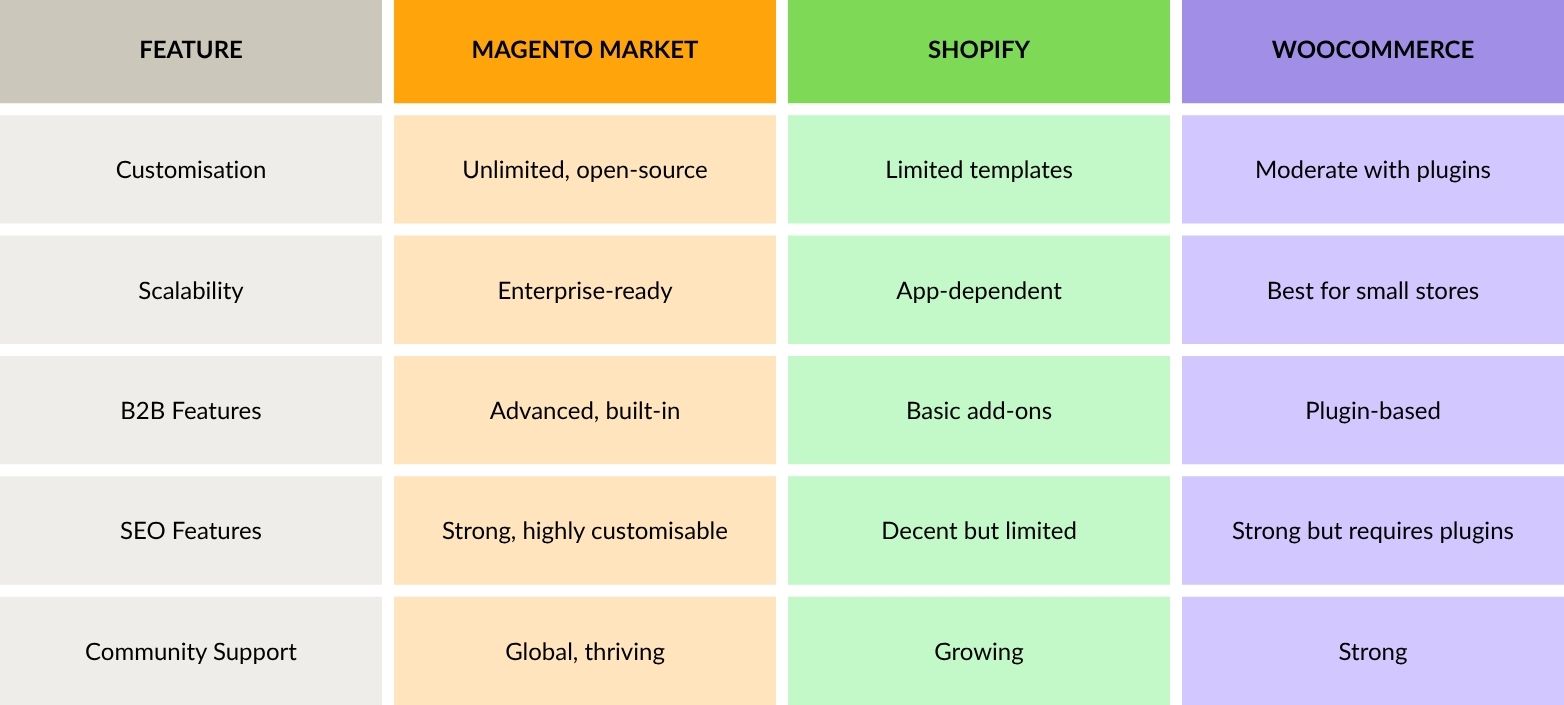
Magento remains the go-to platform for businesses that want to scale and differentiate.
How to Leverage the Magento Market for Your Business
Step 1: Audit your current ecommerce setup
Identify growth barriers, whether they are technical, design-related, or marketing gaps.
Step 2: Partner with Magento experts
An agency like 5MS provides tailored development, SEO, and support.
Step 3: Embrace trends shaping the market
- Personalisation with AI.
- Mobile-first design.
- B2B functionality for wholesale growth.
Step 4: Invest in SEO and performance
Magento’s flexibility means you can fine-tune your store to rank higher, load faster, and convert better.
Conclusion: Unlocking Growth in the Magento Market
The Magento market gives online stores many ways to grow. B2B tools make wholesale easier, and mobile-friendly, omnichannel design improves the shopping experience for customers. Magento’s flexible and scalable platform lets businesses manage more products, reach new markets, and grow steadily. Using Magento helps retailers stay competitive, meet customer needs, and take advantage of new opportunities in ecommerce.