

E-commerce platforms are always changing in the modern digital market to fit ever more varied company models. Among these models, Magento 2 multivendor marketplaces have emerged as a dynamic solution for businesses seeking to expand their product offerings without the burden of inventory management. For Magento 2 store owners, integrating a robust multivendor app can transform their platform into a thriving marketplace where multiple sellers offer their products.
This guide explores the best Magento 2 multivendor applications available, delves into their key features, discusses integration challenges, and highlights real-world examples that demonstrate their impact.
Understanding the Magento 2 Multivendor Concept
A Magento 2 multivendor app enables store owners to convert their single-vendor e-commerce site into a full-fledged marketplace. In this model, third-party sellers list their products alongside the store owner’s offerings. The platform operator typically manages the storefront while facilitating transactions between buyers and multiple vendors.
A critical aspect of this model is the automated commission system: the platform deducts a predefined commission from each sale and transfers the remaining amount directly to the respective vendor. Such functionality not only streamlines financial processes but also builds trust among sellers by ensuring prompt and accurate payouts.
In the context of Magento 2, a multivendor solution must integrate seamlessly with the existing store setup. It should manage product catalogs, vendor profiles, order processing, commission calculations, and payout mechanisms—all while maintaining a user-friendly interface for both customers and vendors.
Key Features to Look for in a Multivendor App
When evaluating Magento 2 multivendor solutions, several critical features should be considered:

Vendor Management
An effective system allows store administrators to onboard, manage, and monitor multiple vendors. This includes creating vendor profiles, verifying credentials, and setting commission rates.
Commission Automation
The app must automatically calculate and deduct the commission from every transaction. The remaining amount should be transferred to the vendor through an integrated payment system.
Product and Inventory Management
Multivendor apps should enable vendors to add and manage their products, track inventory levels, and update pricing—all within the confines of a single Magento platform.
Order Processing and Fulfillment
Streamlined order management that integrates orders from multiple vendors is essential. The system should facilitate order tracking, shipping, and returns.
Dashboard and Reporting
Both administrators and vendors require access to comprehensive dashboards that provide insights into sales, commissions, payouts, and overall performance.
Customization and Scalability
The solution should be customizable to fit specific business needs and scalable enough to accommodate growth as the marketplace expands.
Security and Compliance
Given the financial transactions involved, the app must adhere to industry standards for data protection and payment security.
Challenges in Implementing a Multivendor Marketplace
The transformation from a single-vendor store to a multivendor marketplace is not without challenges. The complexity of integrating multiple seller profiles, automating commission calculations, and ensuring seamless order fulfillment can be significant.
Several considerations must be addressed:
Custom Development Needs
As indicated by community discussions, a one-size-fits-all solution may not exist. Some businesses may require additional custom development to meet specific operational needs. This includes tailoring the commission logic or integrating with external payment gateways.
Data Integration
The multivendor app must work in harmony with Magento 2’s existing modules, such as inventory and order management systems. Any disruption in data flow can lead to errors in commission calculations and delays in payouts.
Vendor Onboarding and Training
Transitioning to a multivendor model often means engaging with sellers who may not be familiar with Magento’s interface. Providing training and ensuring a smooth onboarding process is critical to the marketplace’s success.
Cost Considerations
While some extensions are available off the shelf, integration and customization costs can vary widely depending on the complexity of the marketplace. Initial investment should be balanced against long-term operational benefits.
Top 3 Magento 2 Multivendor App Solutions
Several multivendor extensions have emerged for Magento 2, each offering a unique mix of features, flexibility, and scalability. Below are five notable solutions, complete with an analysis of their strengths and integration potential.
1. Webkul Magento 2 Marketplace Extension
Webkul’s Magento 2 Marketplace Extension is widely recognized as one of the leading multivendor solutions. It offers a comprehensive suite of features designed to turn a Magento 2 store into a fully functional marketplace.

Key Features:
- Vendor Management: Offers an intuitive vendor dashboard for product uploads, order management, and performance tracking.
- Commission and Payout Automation: Automatically calculates commissions based on customizable rates and supports multiple payout methods.
- Product Management: Allows vendors to add and manage their own products, complete with inventory tracking and pricing tools.
- Customization: The open-source nature of the extension enables developers to tailor functionalities according to specific business requirements.
Integration and Cost:
While the extension serves as a robust foundation, community feedback suggests that it may require additional development to meet highly specific needs. Integration costs can vary, but businesses should budget for both the extension license and potential customization services. More details are available on Webkul’s marketplace extension page.
2. Vnecoms Marketplace Extension
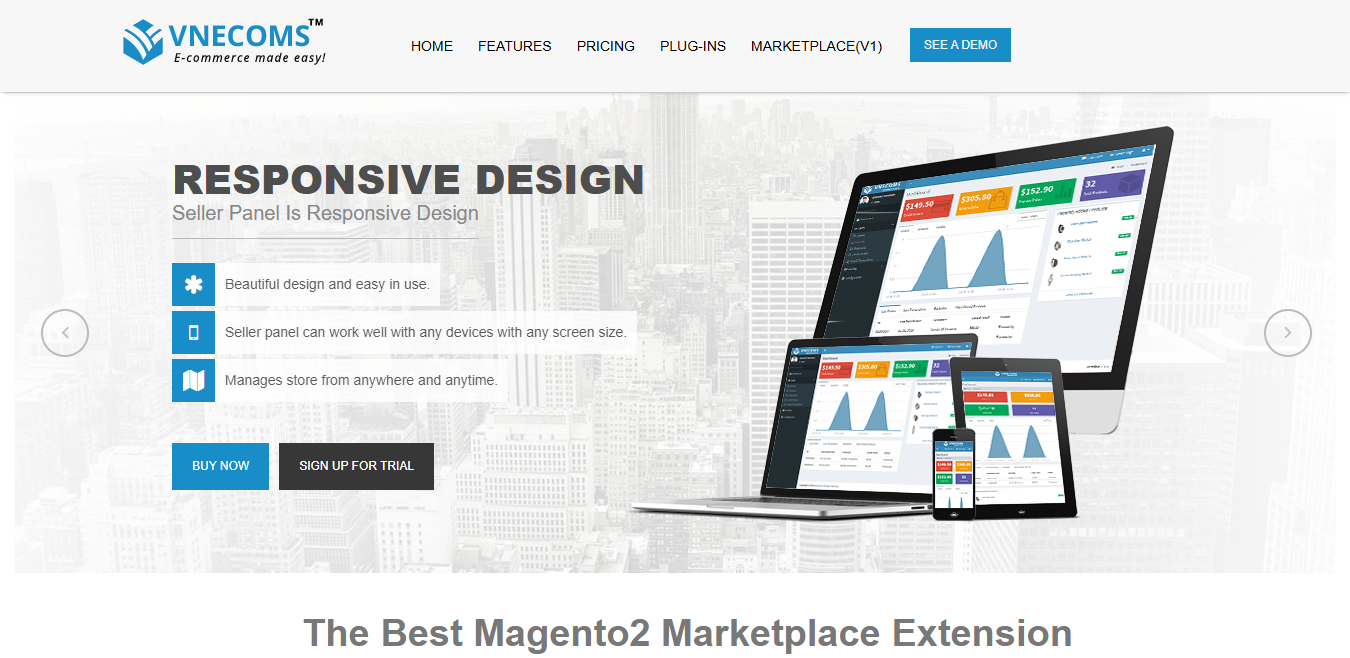
Vnecoms offers a marketplace extension that emphasizes flexibility and ease of use. It is well-suited for businesses looking to launch a multivendor marketplace with minimal hassle.
Key Features:
- Multi-Vendor Management: Enables administrators to manage multiple vendors from a single dashboard, complete with performance analytics.
- Flexible Commission Rules: Supports dynamic commission structures that can be adjusted according to vendor performance or specific product categories.
- Integrated Payment Systems: Facilitates smooth financial transactions by integrating with various payment gateways to ensure timely vendor payouts.
- Scalable Architecture: Designed to accommodate growth, making it an ideal choice for emerging marketplaces.
Integration and Cost:
Vnecoms’ marketplace extension is praised for its flexibility and relatively straightforward integration with Magento 2. As with other solutions, the overall cost depends on customization needs and the volume of transactions processed. Detailed pricing and integration support can be obtained directly from Vnecoms.
3. Magenest Multivendor Marketplace Extension
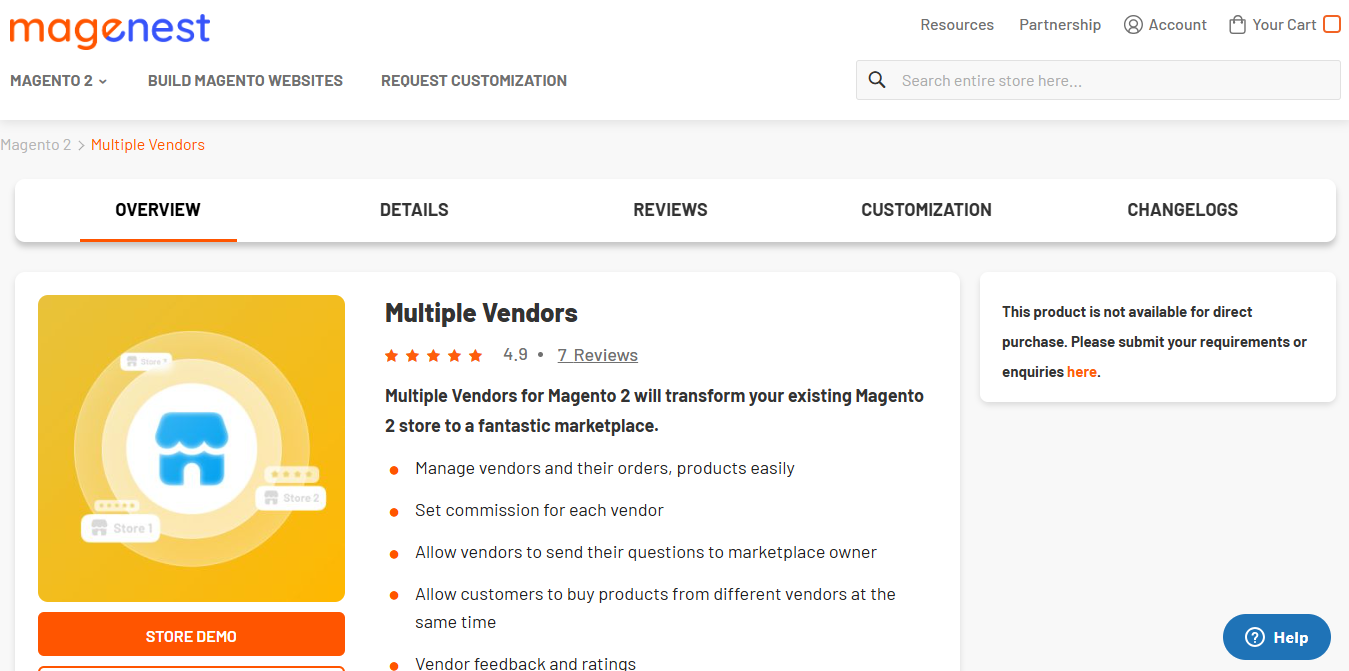
Magenest’s multivendor marketplace extension is another strong contender in the Magento 2 ecosystem. It offers a balance of powerful features and ease of customization, making it suitable for both small and large marketplaces.
Key Features:
- Vendor and Product Management: Provides robust tools for managing vendor profiles and product listings, including advanced filtering and search capabilities.
- Automated Commission System: Automatically processes commission deductions and supports diverse payout methods.
- Customizable Vendor Dashboard: Vendors can track sales, manage orders, and access performance reports through a personalized dashboard.
- Marketing Tools: Integrated marketing features help promote vendor products and drive traffic to the marketplace.
Integration and Cost:
Magenest’s solution is designed with scalability in mind, ensuring that it can grow alongside the business. While the extension covers the essentials, businesses might need additional customization to address specific operational workflows. The integration cost is competitive, with detailed pricing available upon consultation with Magenest.
Best Practices for Integrating a Multivendor App into Magento 2
Implementing a multivendor solution involves more than simply installing an extension; it requires careful planning and strategic execution. The following best practices can help ensure a successful integration:
1. Define Clear Business Requirements
Before selecting a multivendor app, it is critical to outline the specific requirements of the marketplace. This includes understanding the vendor onboarding process, commission structures, product management workflows, and integration points with existing systems.
2. Engage Expert Developers
Given the complexity of multivendor integration, many experts recommend partnering with experienced Magento developers. Leveraging expert assistance can streamline the customization process and ensure seamless integration with Magento 2.
3. Test Rigorously
A multivendor marketplace involves multiple moving parts—from vendor registration to automated commission calculations. It is imperative to conduct comprehensive testing at every stage of implementation to identify and rectify potential issues before the system goes live.
4. Plan for Scalability
The chosen multivendor solution should be scalable to accommodate future growth. As the marketplace expands, it will be essential to handle increased traffic, additional vendors, and a growing product catalog without compromising performance.
5. Provide Training and Support
To ensure a smooth transition, it is important to offer training sessions and continuous support for vendors. This will help them understand how to use the dashboard, manage product listings, and track their sales and payouts effectively.
Real-World Applications and Success Stories
Several businesses have successfully transformed their Magento 2 sites into thriving multivendor marketplaces by leveraging these advanced extensions. For example:
Case Study: A Boutique Fashion Marketplace
A fashion retailer integrated Webkul’s Magento 2 Marketplace Extension to enable independent designers to sell their collections. With automated commission processing and a user-friendly vendor dashboard, the marketplace saw a significant increase in product variety and overall sales.
Case Study: A Regional Marketplace Expansion
An emerging marketplace used Vnecoms’ extension to quickly scale its operations. The flexible commission rules and integrated payment systems facilitated a smooth transition, even as the number of vendors and transactions grew rapidly.
Case Study: A Niche Artisanal Platform
Magenest’s solution was deployed by a platform focusing on artisanal products, where tailored vendor dashboards and marketing tools played a crucial role in driving customer engagement and boosting sales.
Conclusion
The shift toward multivendor marketplaces represents a significant opportunity for Magento 2 store owners looking to diversify their offerings and tap into new revenue streams. The array of available multivendor apps demonstrates that there is a solution to fit every business model and operational need.
By carefully evaluating key features such as vendor management, automated commission systems, and integrated dashboards, businesses can select a multivendor app that aligns with their strategic goals. Moreover, addressing integration challenges through expert development support and adopting best practices for scalability and testing will ensure that the marketplace operates smoothly from day one.