
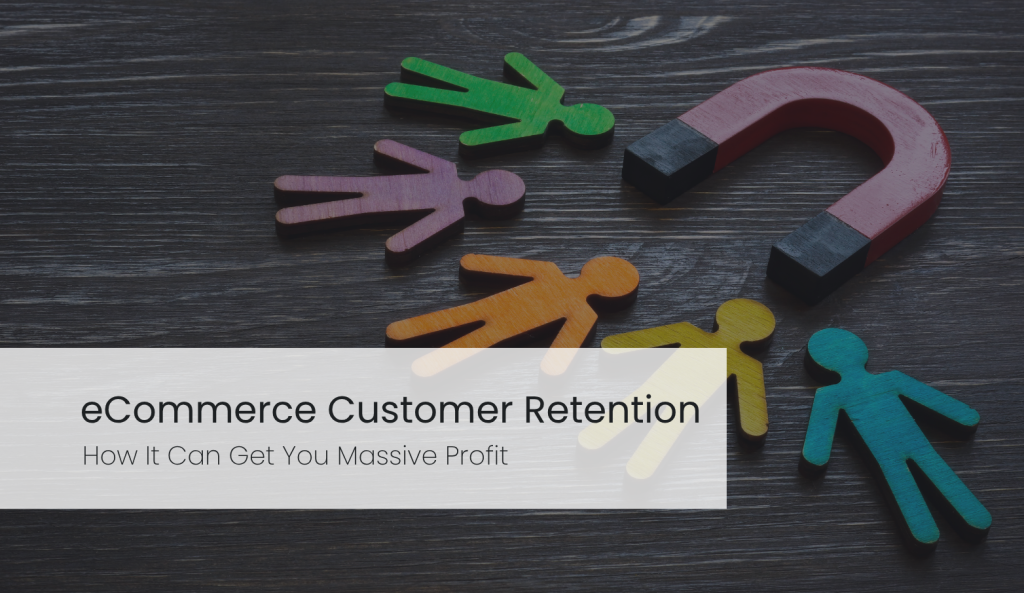
Most online stores pour their budget into chasing new buyers. The maths says they have it backwards. Decades of research from Bain & Company found that lifting customer retention by just 5% increases profits by 25% to 95%, depending on the sector. That is the single most quoted figure in retention for a reason: the customers you already have are the cheapest, most profitable growth you will ever buy.
This guide breaks down eCommerce customer retention into the parts that actually move profit: post-purchase email flows, loyalty programmes, win-back campaigns, and the lifetime value calculation that tells you how much each customer is really worth. By the end you will know where to focus first and how to measure whether it is working.
Profit lift from 5% more retention
Chance of selling to an existing customer
Chance of selling to a brand new prospect
Typical cost gap, acquiring vs keeping
eCommerce customer retention is the practice of keeping existing customers buying again rather than constantly acquiring new ones. It matters because retained customers cost far less to sell to, spend more over time, and compound profit: a 5% rise in retention can lift profit by 25% to 95%. The core levers are post-purchase email flows, loyalty programmes, win-back campaigns, and tracking customer lifetime value so you invest where the return is highest.
Add your hero image URL here
The headline figure comes from Fred Reichheld and the research team at Bain & Company, later published in Harvard Business Review: increasing customer retention rates by 5% increases profits by anywhere from 25% to 95%. The range exists because the effect compounds differently across industries, but the direction never changes. Keep more customers, make more money.
The reason is partly about cost. Acquiring a new customer typically costs around five times more than keeping an existing one, once you account for advertising, discounts, and the time it takes to build trust. It is also about probability. According to data popularised in Marketing Metrics, you have a 60% to 70% chance of selling to an existing customer, against just 5% to 20% for a brand new prospect. You are not starting from zero with someone who has already paid you once.
There is a compounding effect too. A retained customer buys again, refers friends, leaves reviews, and becomes cheaper to serve as they learn your products. Rising customer acquisition costs across paid channels have only sharpened the argument: when every new click is more expensive than last year, the store that retains best wins. Retention does not replace acquisition, but it makes every pound you spend acquiring work far harder. If you want a structured look at where your store leaks customers, our free eCommerce growth audit is a useful starting point.
Customer lifetime value, often shortened to LTV or CLV, is the total profit you expect to earn from a customer across the whole time they buy from you. It is the figure that tells you how much you can afford to spend acquiring and retaining customers, so it deserves to sit at the centre of any retention plan.
The simple version of the formula multiplies three things:
For a profit view, multiply the result by your gross margin %
Take a worked example. If your average order value is £60, a typical customer orders four times a year, and they stay with you for three years, their revenue lifetime value is £60 × 4 × 3, which equals £720. Apply a 40% gross margin and the profit lifetime value is £288. Now imagine retention work lifts the average customer from three years to four. That same customer is suddenly worth £960 in revenue and £384 in profit, a one third increase, from keeping them a single year longer.
- Raise average order value with bundles, thresholds for free delivery, and relevant cross-sells.
- Raise purchase frequency with replenishment reminders, subscriptions, and well-timed email.
- Extend customer lifespan with loyalty rewards, strong service, and win-back before they lapse.
Once you know your LTV, every other decision gets easier. You can see which acquisition channels bring high value customers rather than just cheap ones, and you can justify spending more to keep your best buyers happy. The rest of this guide is about the three levers that grow that number.
The moment after someone buys is the moment they are most engaged with your brand, and the moment most stores go quiet. Automated post-purchase email flows fill that gap. They are set up once and then run on their own, which makes them one of the highest return activities in eCommerce. This is also where retention and email marketing overlap most directly.
A strong post-purchase sequence usually includes these stages:
- Order and shipping confirmation that reassures and sets expectations. These have the highest open rates of any email you send, so add a subtle product tip or a link to care instructions.
- Delivery and onboarding a few days later, helping the customer get the most from what they bought. Useful content here reduces returns and builds trust.
- Review request timed for when the product has been used. Reviews feed social proof for future buyers and re-engage the customer.
- Replenishment or cross-sell based on what they bought, sent when they are likely to need a refill or a complementary item.
- Loyalty invite that brings the customer into your rewards programme while their first experience is still fresh.
The key is relevance. Segment by what the customer bought, how much they spent, and whether it is their first or fifth order. A first-time buyer needs reassurance and education, while a repeat buyer responds better to early access and rewards. Personalised flows consistently outperform a single generic newsletter blast, because they meet the customer where they actually are.
If you have no automated flows yet, build the review request and the replenishment email before anything else. They directly drive the second purchase, which is the hardest and most valuable one to win.
A loyalty programme gives customers a reason to come back to you rather than shop around. Done well, it raises both purchase frequency and average order value, the two levers that feed directly into lifetime value. Done badly, it just hands discounts to people who would have bought anyway, so the design matters.
The main models to choose from:
- Points programmes reward spend with points that convert to discounts or products. Simple to understand and good for frequent, lower value purchases.
- Tiered programmes unlock better perks as customers spend more, which gives high value buyers a status worth protecting.
- Paid memberships charge a fee for benefits like free delivery or exclusive access. The fee itself increases commitment and frequency.
- Referral rewards turn loyal customers into a low cost acquisition channel by rewarding them for bringing friends.
Whichever model you pick, make the first reward easy to reach so customers feel the value early, then make the better rewards worth working towards. Promote the programme inside your post-purchase emails, at the checkout, and across your social commerce channels so it becomes part of how customers experience the brand, not a forgotten page in the footer.
Watch the economics. Model the cost of your rewards against the extra revenue they generate before you launch, and review redemption rates regularly. A programme that boosts loyalty but quietly erodes margin is not a win.
Some customers will always drift away. Churn is the rate at which they stop buying, and reducing it is one of the most direct ways to protect profit. Win-back campaigns target customers who have lapsed but have not necessarily left for good. Because you have a 20% to 40% chance of selling to a former customer, far better than to a cold prospect, these campaigns are well worth the effort.
A practical win-back approach looks like this:
- Define lapsed for your store. If customers normally reorder every 60 days, someone at 90 days is at risk. Use your own purchase data, not a generic rule.
- Lead with a reminder, not a discount. A simple we miss you message with your best products often re-engages people without giving away margin.
- Escalate the incentive only for those who do not respond, with a time limited offer to create urgency.
- Ask why they left. A short survey to the truly disengaged surfaces the product, delivery, or service issues quietly driving churn.
- Suppress the unreachable. Stop emailing people who never open, to protect your deliverability and sender reputation.
The best win-back strategy is to need it less. Strong onboarding, reliable delivery, and proactive service prevent churn before a win-back email is ever required. Treat win-back as a safety net, and treat the feedback it generates as a map of what to fix upstream.
You cannot improve what you do not measure. These are the core metrics to track, ideally on a simple dashboard you review every month.
- Customer retention rate is the percentage of customers you keep over a period. Calculate it as customers at the end of the period, minus new customers gained, divided by customers at the start, times 100.
- Repeat purchase rate is the share of customers who buy more than once. It is the cleanest single signal of whether retention is working.
- Churn rate is the percentage of customers who stop buying. It is the mirror image of retention rate.
- Customer lifetime value ties it all together and shows the financial impact of every improvement you make.
- Time between purchases tells you when to trigger replenishment and when a customer is drifting towards lapsed.
Track these alongside your acquisition numbers so you see the full picture. A store with falling acquisition but rising retention can still be growing profit healthily, while a store chasing only new customers may be filling a leaking bucket. The combination is what reveals the truth.
Add your supporting image URL here
You do not need every tactic at once. The most effective eCommerce retention strategy is built in order, so each step funds the next. Start by measuring your current retention rate and lifetime value, so you have a baseline to beat. Then build your post-purchase email flows, because they cost little to run and drive the crucial second purchase.
Once the flows are live, layer on a loyalty programme to reward and deepen repeat behaviour, and add win-back campaigns to catch customers before they fully lapse. Review your metrics monthly and double down on whatever moves lifetime value most for your particular store. Retention is not a one-off project, it is a habit, and the compounding nature of the Bain figure means the stores that build the habit early pull steadily ahead.
If you would rather have a partner do the heavy lifting, our team builds retention systems as part of wider eCommerce growth programmes, joining the email, loyalty, and data work into one plan.
- Measure your retention rate and lifetime value to set a baseline.
- Build automated post-purchase email flows to win the second order.
- Launch a loyalty programme that protects margin while rewarding repeat buyers.
- Add win-back campaigns and fix the upstream causes of churn.
- Review the numbers monthly and reinvest in what grows lifetime value most.
eCommerce customer retention is the highest leverage profit move most stores are not making. A 5% gain in retention can lift profit by 25% to 95% because retained customers cost less, convert more easily, and grow in value over time. Calculate your lifetime value, build post-purchase email flows, run a margin-aware loyalty programme, and use win-back campaigns to cut churn. Measure retention rate, repeat purchase rate, and lifetime value every month, and reinvest where the return is highest.
Common questions about eCommerce customer retention. Get in touch if yours is not here.
We build the email flows, loyalty programmes, and win-back campaigns that grow lifetime value and profit. Book a free consultation and we will show you where your store is leaking customers.