
The best magento extensions can make a store faster, easier to manage, and easier to grow. They can also create technical debt, tracking issues, checkout friction, and support headaches when the wrong tools are installed together. That is why picking extensions in 2026 needs a stricter approach than simply choosing the most downloaded option or the one with the longest feature list.
Adobe Commerce Marketplace reviews every listing through its Extension Quality Program, and Adobe’s App Assurance programme adds an extra quality layer for selected apps built with performance and scale in mind. Adobe also warns that third-party extensions can negatively affect storefront performance if they are not planned carefully.
For Magento merchants, the smartest stack is usually the one that solves the biggest operational gaps with the fewest moving parts. That means fewer overlapping modules, clearer data flow, strong compatibility checks, and a better fit for your theme, checkout, catalogue, and reporting setup.
What Makes the Best Magento Extensions in 2026
The best Magento extensions in 2026 improve performance, reduce manual work, and support growth without creating unnecessary complexity. A good extension should solve a clear business problem, work cleanly with your store setup, and stay maintainable after updates.
In practice, the strongest tools tend to share a few traits:
- Clear compatibility with current Magento or Adobe Commerce versions
- Stable support and active updates
- Strong checkout, speed, SEO, or operational value
- Low overlap with existing modules
- Reliable compatibility with your frontend setup, especially Hyvä
- Sensible reporting or data benefits, not just more admin options

One practical change in 2026 is that compatibility matters even more than raw feature count. Adobe Commerce Marketplace is currently powered by Adobe Commerce 2.4.8-p3, and extension quality checks are more visible than they used to be.
How We Evaluated the Best Magento Extensions
The best Magento extensions were judged on business value, platform fit, support quality, and risk of creating stack bloat. That matters because many modules look impressive on a product page but create duplication, slower maintenance, or frontend conflicts later.
The main checks used here were:
1. Business Impact
Does the extension improve sales, conversion, retention, reporting, operations, or support in a measurable way?
2. Magento Fit
Does it work well with Magento 2 and current Adobe Commerce practices? Is it suitable for Open Source, Adobe Commerce, or both?
3. Frontend Compatibility
For stores using Hyvä, compatibility is no longer a side note. Hyvä’s own documentation covers a growing ecosystem, and extension providers are still actively updating compatibility across 2026.
4. Stack Efficiency
Does it replace multiple weaker tools, or does it add another layer to an already crowded setup?
5. Maintenance Risk
Extensions that affect checkout, tracking, feeds, shipping, pricing, and indexing need tighter oversight than cosmetic modules.
Best Magento Extensions by Category
The best Magento extensions are easier to pick when grouped by the business problems they solve. Most merchants do not need fifty modules. They need the right mix across SEO, checkout, payments, marketing, shipping, analytics, and operations.
Below is a practical shortlist of 50+ tools and integrations worth knowing in 2026.
SEO and Merchandising Extensions
These are often the first high-impact tools for catalogue-heavy stores.
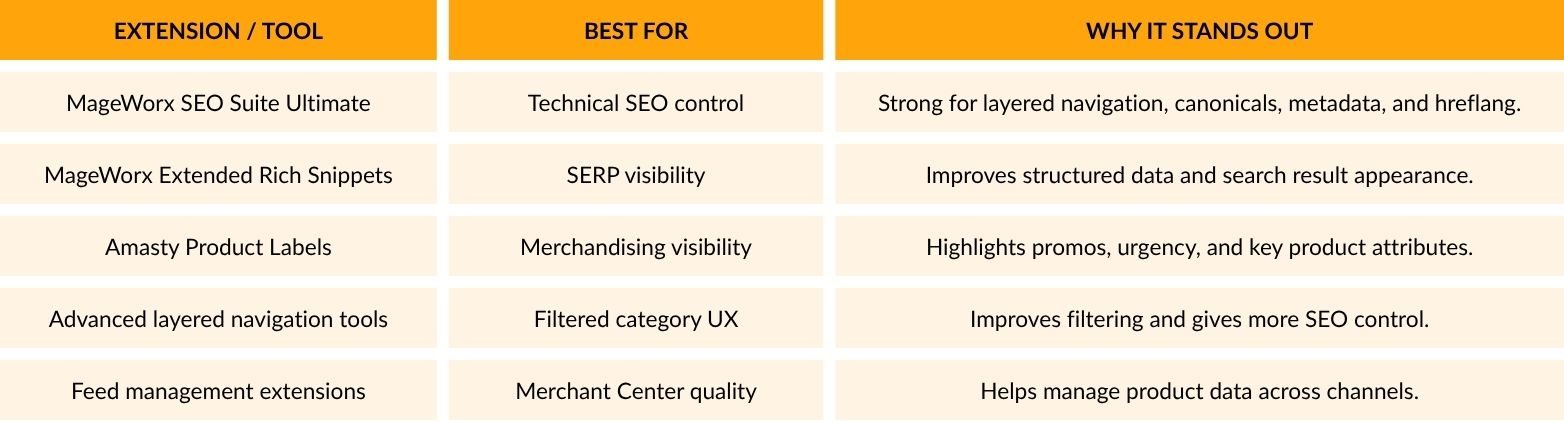
A common miss here is installing SEO modules without fixing the catalogue logic underneath. If product attributes, canonical rules, filter pages, or title structures are messy, no extension will fully rescue the result.
Checkout and Conversion Extensions
Checkout tools still rank highly for stores dealing with abandonment or mobile friction.
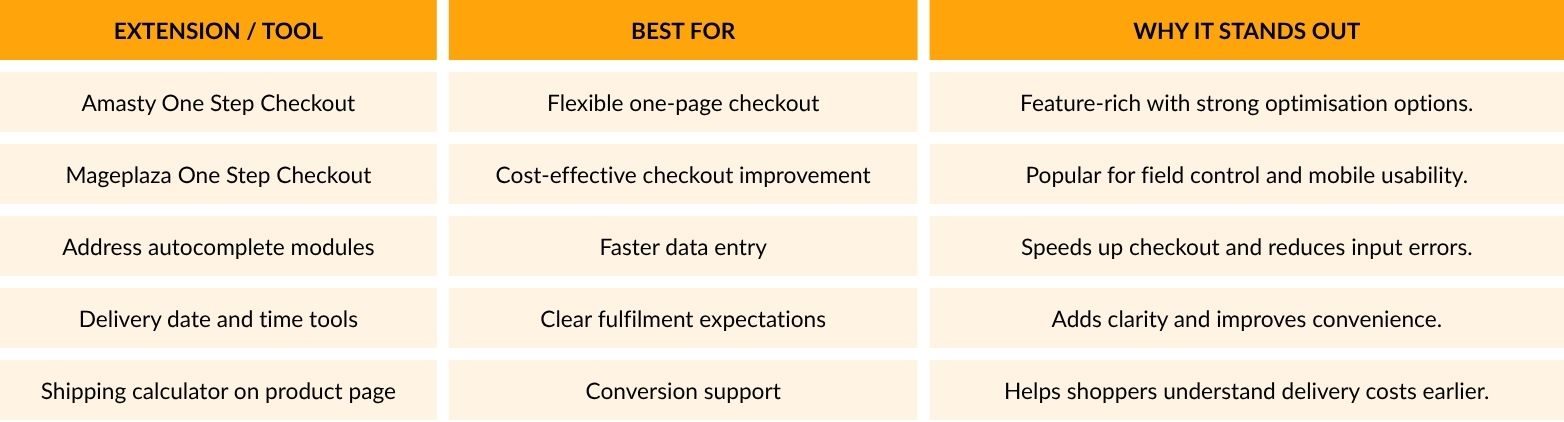
A useful angle that gets missed here: checkout extensions should be judged against your payment mix and delivery logic, not only visual layout. A beautiful one-page checkout can still fail if shipping methods are unclear or payment routing is awkward.
Payments and Fraud Tools
Payment setup shapes conversion, trust, and support volume.
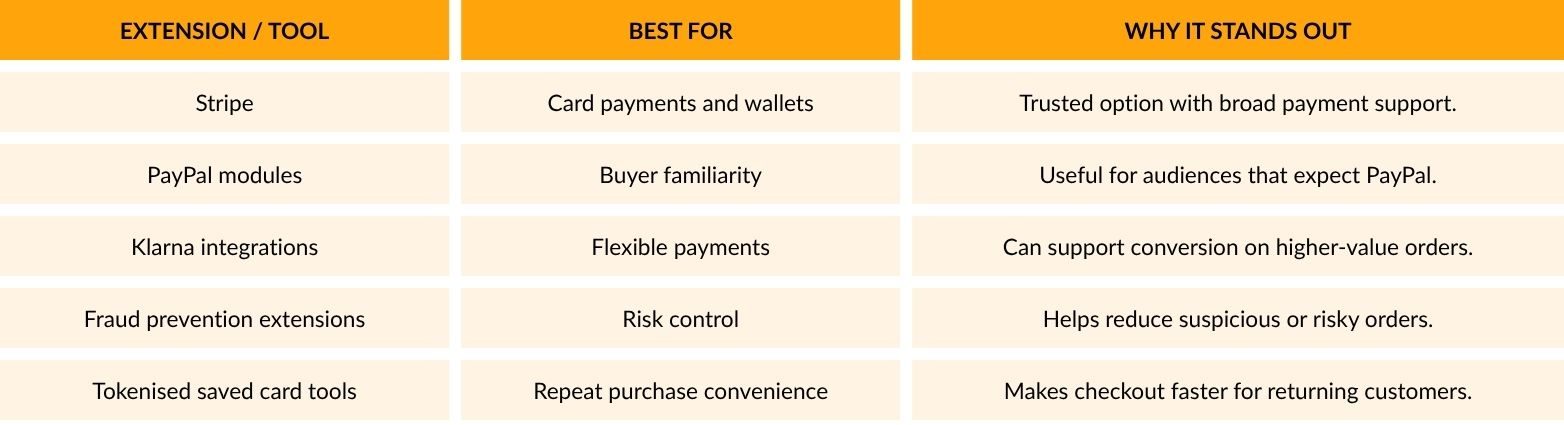
One practical point here: payment extensions need reviewing alongside order value, refund rates, and customer geography. The best Magento extensions in this area are the ones that fit how your customers already prefer to pay.
Analytics, Tracking, and Reporting Extensions
Tracking is where Magento stores either gain clear insight or lose it.
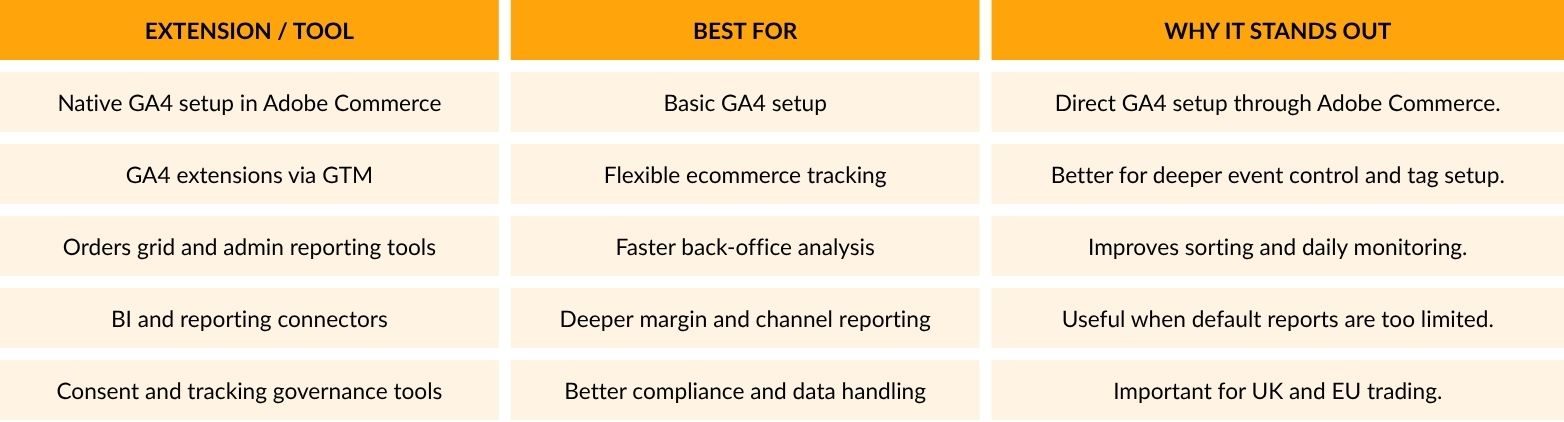
A common problem in Magento is duplicated analytics logic. One module sends events. GTM sends them again. GA4 receives inconsistent data. Google Ads ends up learning on weak signals. In those cases, fewer tracking tools often give better reporting.
Email, CRM, and Retention Integrations
Stores with strong retention usually rely on one main CRM or email platform.
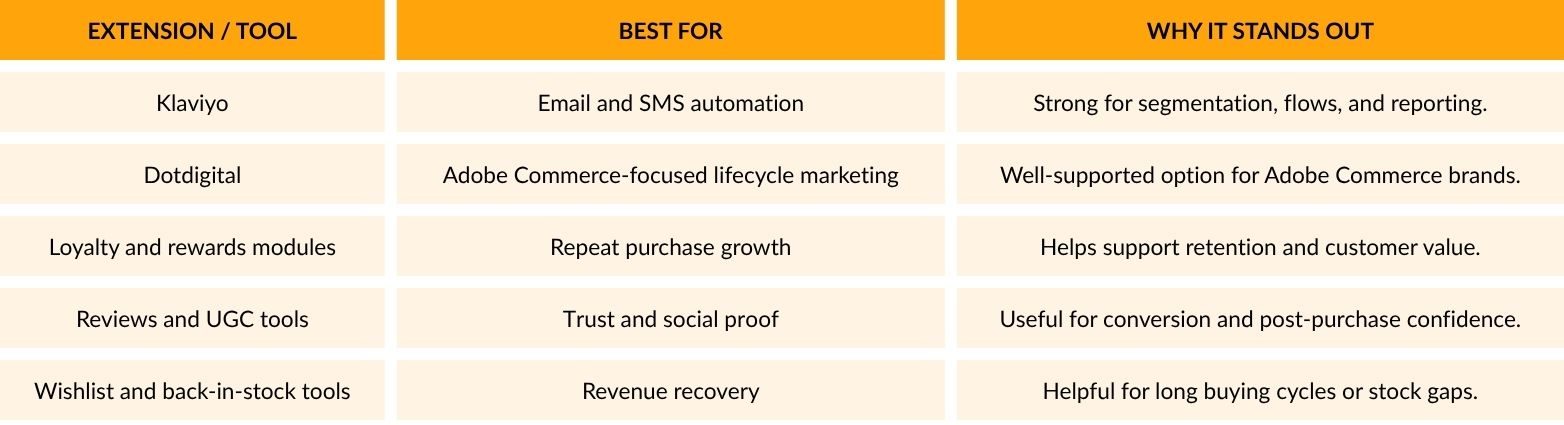
A better way to judge these tools is by data quality and automation depth, not email template features alone. If product, order, browse, and customer events do not sync well, the platform becomes far less useful.
Shipping, Fulfilment, and Delivery Extensions
Shipping tools can solve major operational issues when Magento’s default setup falls short.
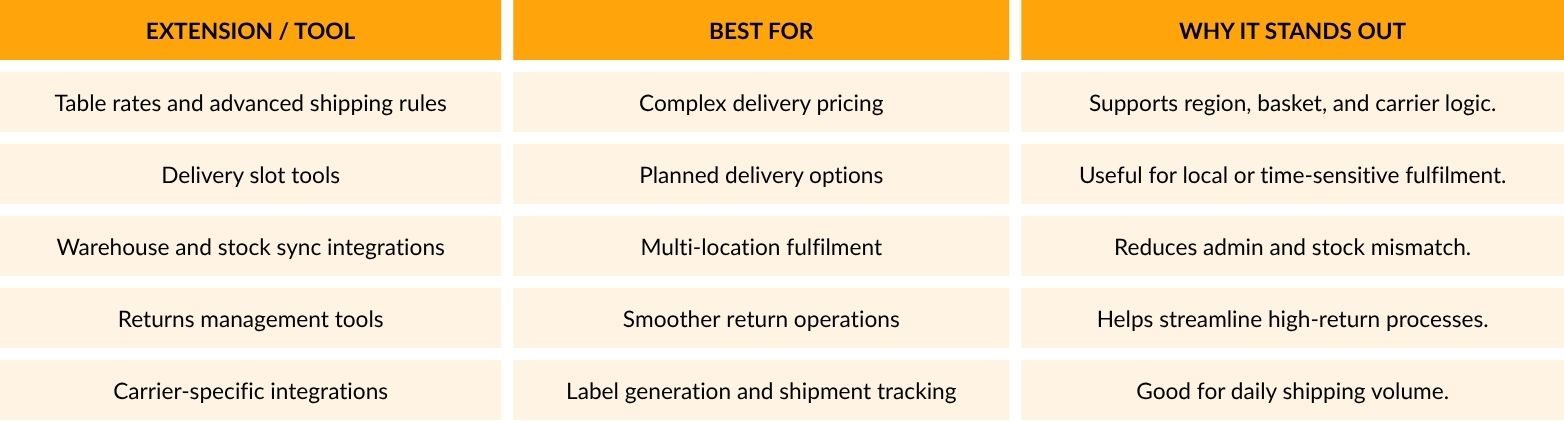
This is one of the least glamorous extension categories, but often one of the most commercially important. Shipping errors create abandoned carts, support tickets, refund cost, and fulfilment delays quickly.
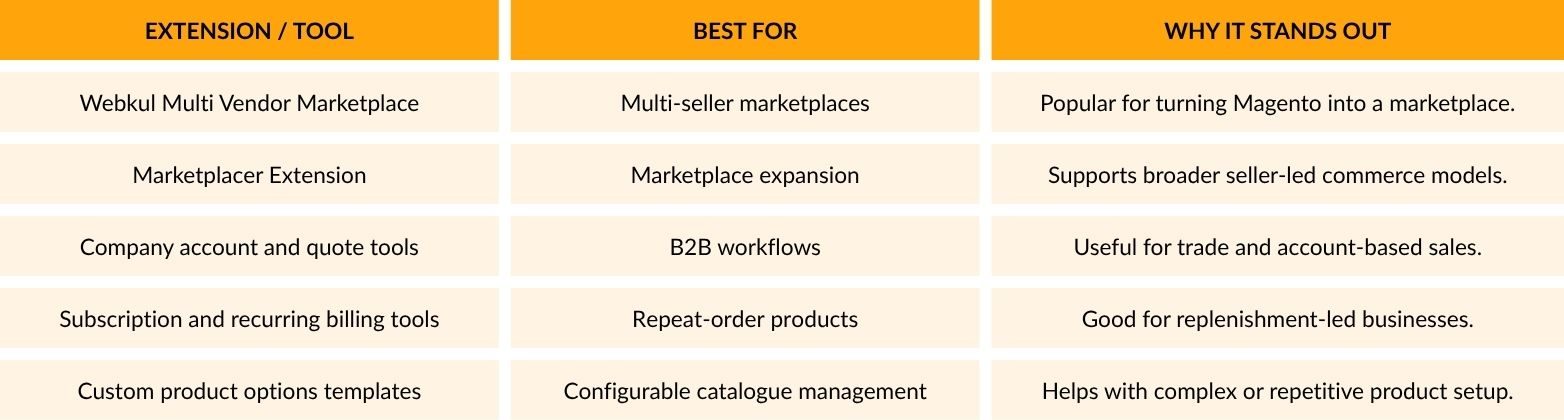
Marketplace, B2B, and Advanced Commerce Extensions
Some stores need more than standard B2C functionality.
The Best Magento Extensions Shortlist for Most Stores
The best Magento extensions shortlist for most stores includes one strong solution in each core area, not several overlapping ones. In many cases, six to ten well-chosen tools will do more good than a stack of twenty-five.
A practical 2026 shortlist for a typical Magento growth store could look like this:
Core Growth Stack
- Strong SEO suite
- Checkout optimiser
- Clean GA4 setup
- CRM and email integration
- Robust feed or catalogue management layer
- Reviews or social proof tool
- Shipping rules extension if native options are too limited
Optional Based on Store Model
- Subscriptions for repeat-order products
- Advanced B2B account features
- Marketplace functions
- Returns management
- Product labelling and merchandising aids
Common Real-World Example
A mid-sized Magento merchant on Hyvä with Google Shopping, Klaviyo, and a broad catalogue often needs:
- SEO control over filter pages and metadata
- A reliable GA4 and GTM setup
- Klaviyo sync with strong event quality
- Checkout simplification
- Feed quality control
- Shipping logic that reflects actual fulfilment rules
That setup tends to be more useful than adding several visual merchandising or admin convenience modules too early.
Mistakes That Make Magento Extension Stacks Expensive

The most expensive Magento extension stacks are usually the busiest ones. Cost comes through overlap, update conflicts, performance drag, poor documentation, and support time.
The most common mistakes are:
Mistake #1: Installing More Than One Tool for the Same Job
This happens a lot with:
- Analytics
- SEO
- Layered navigation
- Pop-ups
- Reviews
- Shipping rules
Mistake #2: Ignoring Theme Compatibility
Hyvä changes the front-end conversation. Extensions that work fine on a standard Luma-based build may need extra work or compatibility modules on Hyvä.
Mistake #3: Treating Marketplace Approval as the Only Check
Marketplace review matters, but store-specific testing still matters too. Adobe’s quality frameworks help, but they do not replace staging, performance checks, and upgrade planning.
Mistake #4: Keeping Legacy Modules After Replatform Changes
Stores that have gone through redesigns, GA4 migration, checkout changes, or CRM upgrades often keep old modules alive long after they have stopped being useful.vvv
Mistake #5: Letting Admin Convenience Drive the Stack
The best Magento extensions should improve customer experience or business efficiency in a meaningful way. Some admin tools save a few clicks but add ongoing maintenance costs that are hard to justify.
How to Choose the Right Magento Extensions for Your Store
Choose the right Magento extensions by starting with store pain points, not extension categories. That keeps the stack leaner and makes extension spend easier to justify.
Use this order:
1. Define the problem first
Is the issue:
- Poor organic visibility
- Checkout friction
- Weak tracking
- Poor retention
- Feed errors
- Fulfilment complexity
- B2B limitations
2. Audit what already exists
Many stores already have partial functionality installed but underused, duplicated, or configured badly.
3. Check Magento version and frontend setup
This is especially important for Adobe Commerce version alignment and Hyvä compatibility.
4. Review support and update history
Active support matters far more than a polished product page.
5. Test on staging first
Checkout, payments, shipping, indexing, and tracking should never be pushed live without proper validation.
6. Keep internal ownership clear
Someone should own extension decisions, update schedules, and dependency awareness. Without that, stacks drift.
Conclusion
The best Magento extensions in 2026 are the tools that solve clear problems without making your store harder to run. A strong Magento stack should improve speed, SEO, checkout, tracking, fulfilment, and retention while staying compatible with your version, theme, and wider setup. The right approach is to choose fewer, better extensions, test them properly, avoid overlap, and focus on tools that support real commercial results rather than extra features you may never use.