

Organic search is the highest-intent, lowest-cost channel in eCommerce, so the SEO company you choose has an outsized effect on your revenue for years. The trouble is that “best eCommerce SEO company” searches return a wall of agencies all claiming the same thing, and it is hard to tell a genuine specialist from a generalist with a shiny site. This guide gives you a framework to build and judge your own 2026 shortlist: what a great eCommerce SEO company actually does, how the options compare, the technical, content and structured-data work that matters, Magento SEO specifics, and how to choose with evidence rather than the pitch.
It is written to help you shortlist confidently, not to hand you a list to copy blindly, because the best agency for your store depends on your platform, stage and goals. Use the criteria and the comparison below to draw up a shortlist you can trust.
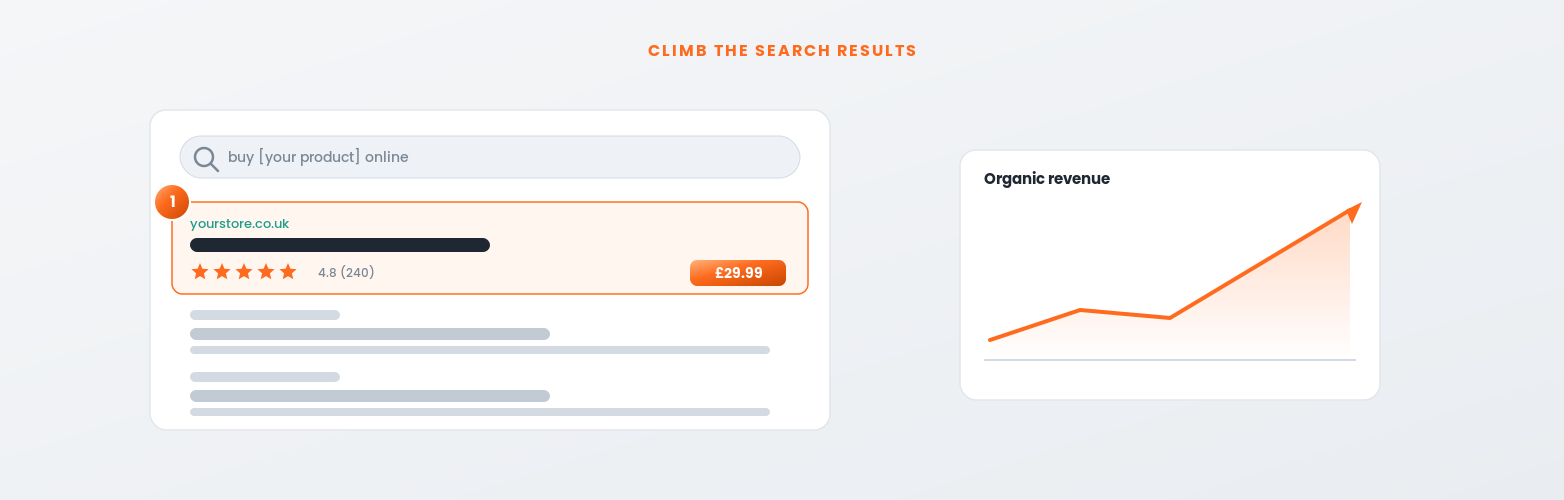
Of trackable web traffic is organic
Industry data
Pillars: technical, content, authority
What good SEO covers
Transparency and reporting to demand
On work and results
Specialist partner beats a generalist
For serious growth
The best eCommerce SEO company for your store is a specialist that proves results across the three SEO pillars, technical, content and authority, knows your platform, and reports transparently on revenue, not vanity rankings. Judge candidates on relevant expertise and case studies, technical and structured-data capability, content and category strategy, and clear reporting. A specialist eCommerce SEO agency beats a generalist for stores serious about organic growth, because eCommerce SEO has quirks, faceted navigation, product and category optimisation, schema, that generalists routinely get wrong. Shortlist two or three, score them on the same criteria, and choose on evidence.
eCommerce SEO is not the same as general SEO. A great eCommerce SEO company works across three pillars at once: the technical health of a large, complex store; content and category strategy that captures buying intent; and the authority that earns rankings in competitive markets. It understands product and category pages, faceted navigation, structured data, site speed and crawl budget, the things that make or break organic performance for a store, and it ties all of it to revenue rather than to rankings for their own sake.
That last point matters most. Plenty of agencies will report on keyword positions and traffic; a great one reports on the organic revenue, conversions and return those rankings actually produce. Organic search is roughly half of all trackable website traffic and the highest-intent free channel there is, so the value of good eCommerce SEO compounds quietly for years. But only if the work is aimed at commercial outcomes, not a dashboard of vanity metrics.
So the question is not simply “who is the best eCommerce SEO company”, but “which company will deliver commercial organic growth for my store, on my platform”. That reframing is what the rest of this guide helps you answer. For the full picture of what the discipline involves, see our eCommerce SEO guide.
Before you shortlist named agencies, decide which type of partner fits your store. Here is how the main options compare for eCommerce SEO in 2026.
| Option | Best for | The trade-off |
|---|---|---|
| Specialist eCommerce SEO agency | Stores serious about organic growth | Deep platform and revenue focus; costs more than a freelancer, worth it at scale |
| Generalist SEO or marketing agency | Broad marketing needs beyond the store | Convenient, but often shallow on eCommerce and platform specifics |
| Freelancer or consultant | Smaller budgets or specific tasks | Cost-effective, but limited capacity and key-person risk |
| In-house SEO team | Large brands with continuous need | Full control, but the full skill set is hard and expensive to hire |
For most stores serious about organic growth, a specialist eCommerce SEO agency is the strongest choice, because eCommerce SEO has quirks that generalists routinely mishandle, and because a specialist brings patterns learned across many stores. A freelancer can suit a small store or a one-off audit; an in-house team makes sense only at real scale. Whichever route, the criteria for judging a shortlist are the same, and we cover those, plus the wider decision, in our guide to choosing the right eCommerce agency.
A good eCommerce SEO company should be strong across three areas. Ask any shortlisted agency how they approach each, and their answers will quickly reveal the specialists from the generalists.
Structured data (schema markup) is where a specialist really shows their hand. Adding Product, Offer, Review, Breadcrumb and FAQ schema helps Google understand your pages and unlocks rich results, star ratings, prices and availability in the search listing, that lift click-through rates without moving your ranking position. For eCommerce it is one of the highest-return, most overlooked pieces of technical SEO.
A great eCommerce SEO company implements valid, complete structured data across product and category pages and keeps it error-free as the catalogue changes, following Google’s structured data guidelines. If a candidate cannot talk fluently about schema and rich results, they are not an eCommerce specialist.
If you run Magento or Adobe Commerce, platform expertise is not optional. Magento is powerful but has well-known SEO pitfalls that a generalist will miss and a specialist knows how to handle. Faceted navigation, layered filters that can generate thousands of near-duplicate, crawlable URLs, is the classic Magento SEO trap, wasting crawl budget and diluting rankings unless it is controlled with the right indexation and canonical rules. Getting this right on a large catalogue is a specialist job.
Beyond that, Magento SEO means managing URL structure and redirects carefully, especially through upgrades and re-platforms; tuning performance, since Magento can be heavy and speed is a ranking and conversion factor; configuring native SEO settings and meta rules at scale; and implementing structured data cleanly across the catalogue. A Magento specialist also protects your rankings during technical work such as upgrades and migrations, which is exactly where careless SEO handling loses traffic. Our Magento support and migration work is built around protecting organic performance, not just shipping features.
So if you are on Magento, weight platform expertise heavily when you shortlist. The best eCommerce SEO company for a Magento store is one that understands the platform as deeply as it understands SEO, because the two are inseparable on a complex store. As an Adobe Solution Partner, that combination is exactly where 5MS focuses.
Rather than copying someone else’s list, build a shortlist you can trust by scoring candidates on the criteria that predict results. Draw up two or three eCommerce SEO companies and assess each on:
Relevant eCommerce and platform proof. Case studies from stores like yours, on your platform, with real organic revenue results, not just ranking screenshots.
Technical and structured-data depth. Can they talk fluently about faceted navigation, Core Web Vitals, schema and rich results? Vague answers here are a red flag.
Transparent, revenue-focused reporting. They should report on organic revenue and conversions and show where the time goes, with no black box and no guaranteed-rankings nonsense.
Communication and fit. Clear, responsive and honest during the pitch is the best preview of the working relationship. Beware anyone guaranteeing rankings or hiding how they earn links.
Score each candidate the same way, check references, and choose on the evidence. If 5MS makes your shortlist, we would expect to be judged on exactly these criteria: a UK eCommerce specialist and Adobe Solution Partner, deep on Magento and technical SEO, transparent on time and reporting on organic revenue. See how we approach organic growth across our eCommerce services, and how we measure it in our analytics guide.
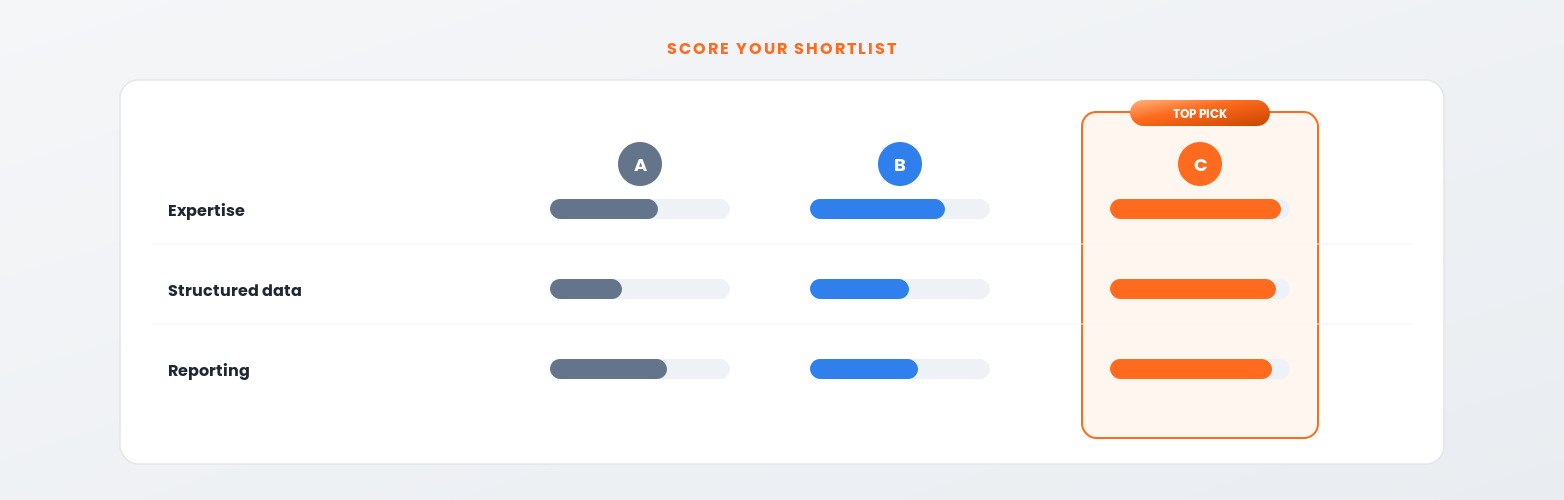
The best eCommerce SEO company for your store is a specialist that delivers across the three SEO pillars, technical, content and authority, knows your platform, and reports on organic revenue rather than vanity rankings. A specialist eCommerce SEO agency generally beats a generalist, freelancer or in-house team for stores serious about organic growth, because eCommerce SEO has quirks, faceted navigation, category optimisation and structured data, that generalists get wrong. Judge candidates on relevant proof, technical and schema depth, transparent revenue-focused reporting, and communication. On Magento, weight platform expertise heavily. Shortlist two or three, score them on the same criteria, and choose on evidence, not the pitch or guaranteed rankings.
Common questions about choosing an eCommerce SEO company. Get in touch if yours is not here.
Shortlist two or three specialists and score them on the same criteria: relevant eCommerce and platform proof with real revenue results, technical and structured-data depth, transparent reporting tied to organic revenue, and clear communication. Check references, and be wary of anyone guaranteeing rankings or hiding how they earn links. Choose on the evidence, not the pitch.
For stores serious about organic growth, a specialist eCommerce SEO agency is the stronger choice. eCommerce SEO has quirks, faceted navigation, product and category optimisation, structured data, that generalists routinely mishandle, and a specialist brings patterns learned across many stores. A generalist can suit broader marketing needs, but if organic revenue matters, choose the specialist.
It varies widely with your store’s size, competitiveness and goals, from a modest monthly retainer with a freelancer to a substantial programme with a specialist agency. Judge it on return, not the fee: SEO compounds over time, so a capable specialist that grows organic revenue usually pays for itself many times over, while cheap SEO that achieves nothing is the real waste.
Typically three to six months to see meaningful movement, and longer in competitive markets, because SEO builds over time as authority and content compound. Technical fixes can produce quicker wins, but organic growth is a medium-term investment. Be sceptical of any agency promising instant results, and expect a good one to set realistic timelines up front.
Magento has well-known SEO pitfalls, most notably faceted navigation that can create thousands of near-duplicate crawlable URLs, plus URL, performance and indexation nuances. Handling these correctly on a large catalogue takes platform expertise a generalist lacks. A Magento SEO specialist also protects rankings during upgrades and migrations, where careless technical work often loses organic traffic.
Structured data, or schema markup, is code that helps Google understand your pages and can unlock rich results, star ratings, prices and availability shown in the search listing. For eCommerce, Product, Review, Breadcrumb and FAQ schema can lift click-through rates without changing your ranking position, making it one of the highest-return, most overlooked pieces of technical SEO. A good specialist implements it cleanly and keeps it valid.
Yes, absolutely. No agency can guarantee specific Google rankings, because Google controls the algorithm and no one can promise a position. Guarantees are a classic red flag, often paired with spammy link-building that risks penalties. A trustworthy eCommerce SEO company sets realistic expectations, focuses on organic revenue, and is transparent about exactly how it earns results.
Yes. 5MS is a UK eCommerce specialist and Adobe Solution Partner that delivers technical SEO, content and category strategy, structured data and authority building, with deep Magento expertise and transparent reporting on organic revenue. If you are shortlisting eCommerce SEO companies, we would welcome being scored against the criteria in this guide. Get in touch for an honest review of your organic opportunity.
→How to choose the right eCommerce agency
→Magento support and maintenance services from 5MS
Source: Google Search Central, Introduction to Structured Data.
By the 5MS team, UK eCommerce agency and Adobe Solution Partner. Last updated: July 2026.