

Ecommerce support should help a growing brand stay stable, protect sales, improve reporting, and make day-to-day trading easier to manage. It should also give your team a clearer path when the store gets busier, the setup gets more complex, and small issues start carrying bigger commercial risk.
Many brands start looking for ecommerce support after something goes wrong, such as tracking failing, a feed being disapproved, checkout conversion dropping after a site update, or a platform patch creating pressure right before a busy period. Orders may still come through, but trust in the setup starts to slip and internal teams often spend far too much time dealing with issues instead of moving the business forward.
That is where strong ecommerce support makes a clear difference. It should cover trading operations, analytics, product feeds, releases, platform health, and practical commercial input. It should help your brand work faster, reduce avoidable errors, and keep the site in a stronger position as growth continues.
Table of Contents
What Is Ecommerce Support?
Ecommerce support is the ongoing technical, operational, and commercial support that helps an online store trade reliably and grow with fewer avoidable issues. It usually includes platform maintenance, analytics support, feed management, checkout checks, issue resolution, and advice linked to performance.
A lot of pages covering this topic stay broad. They mention maintenance, customer service, and technical fixes, but often stop there. That leaves out several areas growing brands rely on every week, such as reporting accuracy, feed health, release control, and clear accountability around commercial impact.
For growing brands, ecommerce support often needs to cover five core areas.
Platform Stability
This is the technical foundation that keeps the store running day to day. It includes updates, integrations, bug fixes, patching, uptime checks, and support around releases.
Revenue Protection
Support should help protect the parts of the site that directly affect sales. That includes checkout health, payment issues, product data accuracy, and feed continuity across key channels.
Measurement
Reliable reporting helps brands make better decisions on spend, trading, and growth. This area includes GA4 ecommerce events, attribution quality, channel visibility, and confidence in performance data.
Operational Support
Growing stores need support that fits around live trading activity and internal workflows. That includes product launches, promotions, merchandising changes, shipping logic, and peak trading preparation.
Commercial Guidance
Good ecommerce support should help teams decide what to fix first and why. That means focusing on work that can improve conversion, retention, margin, or acquisition efficiency.
Why Growing Brands Need Ecommerce Support

As a brand grows, complexity tends to increase quickly. More channels, more integrations, more SKUs, more promotions, and more people making site changes all create more chances for revenue leaks and reporting problems.
A smaller store can often get by with reactive technical help for a while. A growing store usually reaches a point where that setup starts causing friction. Once paid media, SEO, email, marketplaces, reviews, bundles, apps, and fulfilment tools are all connected, even a small error can create a costly problem.
Measurement is a simple example. If ecommerce events are missing, duplicated, or firing in the wrong order, reporting becomes harder to trust. That affects channel analysis, budget decisions, stock planning, retention activity, and internal reporting.
This is why ecommerce support needs to extend beyond technical fixes. It should support better trading decisions across the whole store.
What Should Ecommerce Support Include Day to Day?
Day-to-day ecommerce support should include monitoring, fixes, testing, reporting checks, and practical help across the trading journey. It should feel proactive and structured, not quiet until something breaks.
Here is what strong support often includes.
1. Platform Maintenance and Technical Health
This is the base layer of ecommerce support. It covers core platform upkeep, plugin or app conflicts, theme issues, broken functionality, speed concerns, and security patching.
A growing brand should expect:
- Regular technical checks
- Clear ownership of bugs
- Sensible response times
- Release notes written in plain English
- Staging and testing before anything goes live
When this area is weak, small technical problems can sit unnoticed until they start affecting customers, orders, or internal workflows.
2. Analytics and Tracking Validation
Many support retainers mention reporting, but fewer treat data quality as an active operational task.
That gap can create serious problems. If purchase tracking breaks after a checkout change, or channel attribution becomes distorted, teams can end up making expensive decisions based on bad data.
A good ecommerce support partner should check:
- Purchase tracking accuracy
- Channel attribution trends
- Checkout step tracking
- Unwanted referral issues
- Duplicate tags or broken pixels
- Revenue differences between platform data and analytics
For example, a store may see steady ad spend and healthy traffic while reported revenue in GA4 suddenly drops. The issue might be a broken purchase event after a template update, not weaker campaign performance. Without regular validation, the team may respond to the wrong problem.
3. Merchant Center and Feed Support
Feed health is one of the most overlooked parts of ecommerce support.
If product data is incomplete, inconsistent, or inaccurate, ads and free listings can be affected long before anyone spots the problem. A broken feed can quietly reduce visibility, damage campaign performance, or block products from showing properly in search results.
Support in this area should include:
- Feed diagnostics checks
- Attribute mapping support
- Landing page consistency reviews
- Disapproval investigation
- Shipping and returns visibility checks
- Launch QA before campaigns go live
For growing brands running paid shopping activity, this area should be treated as part of normal trading support, not an occasional fix.
4. Checkout Support and Conversion Safeguards
Checkout issues can appear at the worst time. They often show up during promotions, after app installs, or after design and template changes that looked harmless at first.
Good ecommerce support should include:
- Checkout testing after releases
- Payment method checks
- Shipping logic validation
- Mobile UX reviews
- Post-purchase page checks
- Promo code and discount testing
For Shopify brands especially, support should also account for the platform’s checkout rules and extension limitations. Quick workarounds can create bigger issues later if they are not handled properly.
A support team should understand the platform well enough to protect checkout performance without creating unnecessary long-term risk.
5. Release Management and Peak Readiness
Support should help brands make site changes safely.
That includes:
- Pre-release QA
- Rollback planning
- Peak trading checklists
- Promo launch checks
- Staging sign-off
- Risk reviews before major events and seasonal campaigns
This is one of the clearest signs of strong ecommerce support. It helps brands launch changes with confidence and reduces the chance of avoidable disruption during busy periods.
What Service Levels Should You Expect?
You should expect clear service levels, named ownership, and a defined process for urgent issues, routine tasks, and planned improvements. Support should feel organised and easy to follow.
A sensible structure usually includes the following:
|
Area |
What to Expect |
|
Response Times |
Fast acknowledgement for urgent trading issues and clear turnaround times for standard tasks |
|
Prioritisation |
Revenue-impacting issues handled first |
|
Escalation |
A clear route for outages, checkout failures, or major trading risks |
|
Reporting |
Regular updates on open issues, completed work, and next priorities |
|
Planning |
A monthly or fortnightly view of upcoming releases and support activity |
|
Documentation |
Test notes, change logs, and implementation notes your team can use |
One good sign is how a support team handles unclear issues. Strong teams explain what has been tested, isolate likely causes, show the commercial impact, and outline next steps clearly.
What Practical Support Looks Like Across Different Platforms
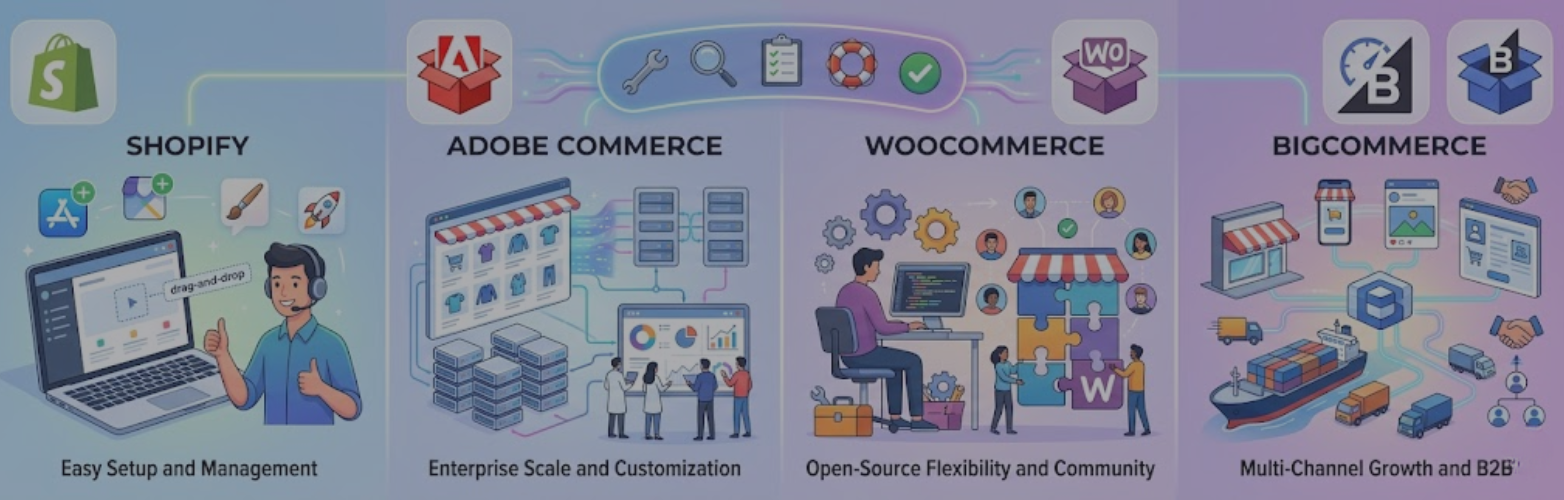
Good ecommerce support should reflect platform-specific behaviour. Shopify, Adobe Commerce, WooCommerce, and BigCommerce each come with different risks, workflows, and technical limits.
Shopify
Support should cover app conflicts, theme changes, event tracking, checkout extensibility, and the effect of customisations on speed and reporting.
Adobe Commerce
Support should include patch planning, extension control, release testing, environment management, and careful handling of security updates.
WooCommerce
Support should cover plugin compatibility, hosting performance, order attribution visibility, and a cautious update process that reduces the chance of store disruption.
BigCommerce
Support should focus on app management, theme workflow, staging discipline, and safe deployment processes before changes reach the live site.
A support setup that treats every platform the same often leaves important gaps.
What Questions Should You Ask Before Choosing Ecommerce Support?
Ask questions that show how a support team thinks, tests, and prioritises commercial risk.
A useful shortlist includes:
- How do you handle urgent trading issues outside routine tasks?
- What do you check after a major release or promotion launch?
- How do you validate analytics after checkout or theme changes?
- Who owns the Merchant Center and feeds issues when performance drops?
- How do you prioritise support tasks against revenue impact?
- What does your staging and QA process look like?
- How do you report completed work and next actions?
- What platform-specific risks do you usually see in stores like ours?
These questions tend to reveal much more than a simple package summary.
What Are the Signs Your Brand Has Outgrown Basic Support?
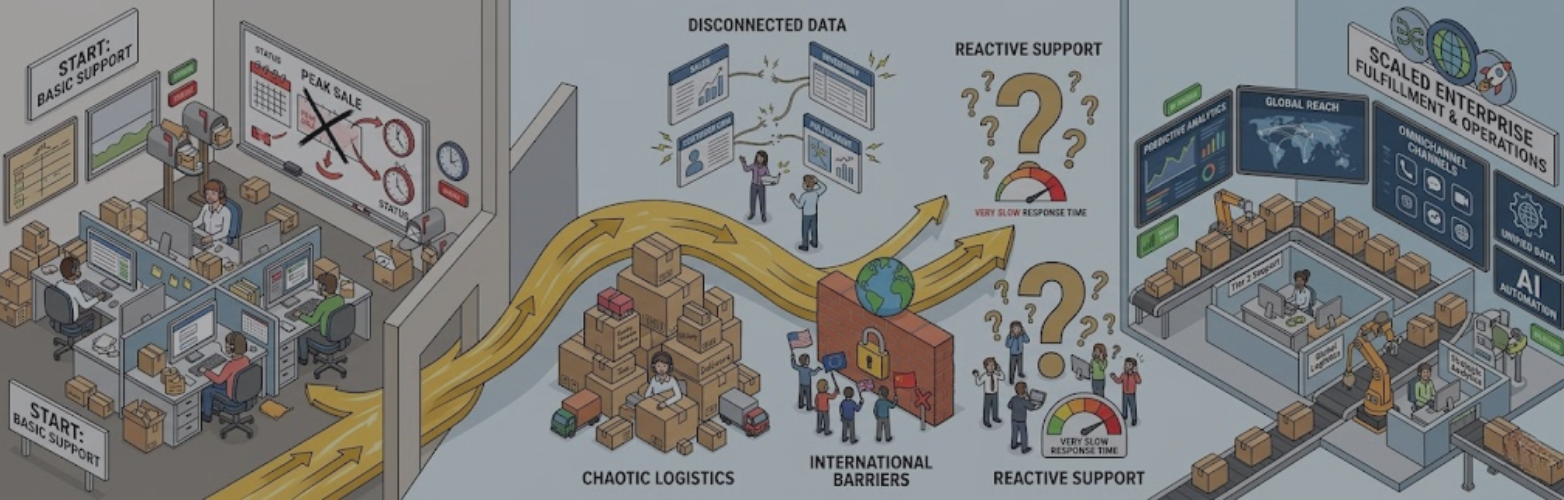
A brand usually outgrows basic support when the business keeps moving but the systems, reporting, and release process start falling behind.
Common warning signs include:
- Your team no longer fully trusts reported revenue
- Small changes create unexpected trading issues
- Feeds break and nobody notices quickly
- Promotions rely on manual workarounds
- Checkout issues take too long to isolate
- Platform updates feel risky every time
- Internal teams spend too much time chasing suppliers, developers, or agencies
- Growth decisions rely on instinct because the data feels unstable
At this stage, ecommerce support becomes closely tied to revenue protection and operational control.
What Should Good Ecommerce Support Deliver Commercially?
Good ecommerce support should reduce avoidable revenue loss, improve speed across trading activity, and give teams stronger confidence in the numbers.
That usually shows up as:
- Cleaner analytics
- Fewer downtime incidents
- Stronger feed consistency
- Faster launches
- Safer releases
- Fewer checkout leaks
- Better internal trust in reporting
- More time spent on growth activity instead of fixes
The best support relationships also improve rhythm inside the business. Teams have regular checks, clearer priorities, and a more stable process around site changes and issue resolution.
Conclusion
Ecommerce support should help a growing brand trade with confidence, protect sales, and scale with fewer avoidable problems. A strong setup goes far beyond fixing bugs when they appear. It should cover platform health, data accuracy, feed stability, checkout performance, release control, and commercially useful guidance.
If your current support does not help your team move faster, catch issues earlier, and trust the numbers with confidence, it may be too limited for the stage your brand has reached.