The right ecommerce website development services should include platform fit, UX planning, technical SEO, clean integrations, measurement, performance targets, and a realistic support model. If those pieces are vague, the proposal is incomplete.
Here is what to check.
1. Platform Fit, Not Platform Preference
A good agency should explain why a platform suits your business model, team, and growth plans. It should not push the same stack every time.
Ask how they decide between:
- Shopify or Shopify Plus
- WooCommerce
- Adobe Commerce
- BigCommerce
- A headless build
- A more traditional setup
A practical example helps here.
A fast moving DTC brand with a lean team may do well with a platform that keeps everyday management simple and lowers developer dependence. A business with complex pricing rules, account-based buying, custom quoting, or unusual product logic may need more flexibility and tighter integration options. WooCommerce positions ownership, flexibility, and lower total cost of ownership as key strengths for scaling merchants, while Shopify’s enterprise guidance makes clear that headless can add significant cost and technical complexity.
That matters because the wrong platform decision can lock you into extra spend before you have even started growth work.
2. A Clear View of Total Cost, Not Just Build Cost
This is one of the easiest traps to fall into.
The quoted project fee is only one part of the investment. You also need to understand:
- App and extension costs
- Hosting or platform fees
- Third party search, review, or merchandising tools
- Payment gateway costs
- Ongoing bug fixing
- Retainers or support blocks
- Change request pricing
- Cost of future feature releases
A cheap build can become expensive very quickly if the site relies on too many paid apps, brittle custom code, or a support arrangement that bills every small request separately.
Ask for a 12 month cost view. Not a launch fee. A trading fee.
3. Search Visibility Built Into the Development Scope
A surprising number of ecommerce builds still treat SEO as a later job. That is a mistake.
Search visibility should be part of the build plan at the start, especially for:
- Site architecture
- Internal linking
- Faceted navigation handling
- Canonicals
- Product variants
- Pagination logic where relevant
- Redirect mapping
- Schema and structured data
- XML sitemaps
- Crawl efficiency
Google’s ecommerce documentation is very clear that structured data helps Google understand product and business information more accurately. Product markup can support richer results such as price, availability, ratings, shipping, and returns. Google also recommends ecommerce-relevant markup such as Product, ProductGroup, BreadcrumbList, LocalBusiness, and Organization.
That means your agency should be able to answer questions like:
- How will product variants be handled?
- What happens to old URLs in a migration?
- How will category filters be controlled?
- Will return policy and shipping details be marked up?
- How will merchandising content sit alongside SEO content?
If they cannot answer those clearly, the SEO risk is already visible.
4. Checkout Architecture That Matches How People Actually Buy
A lot of proposals talk about a “streamlined checkout” without saying what that means.
Ask for specifics.
You want to know:
- How many required fields are planned?
- Can guest checkout be used?
- Which payment methods will be offered?
- How are delivery choices shown?
- What is the mobile checkout experience like?
- How are errors handled and surfaced?
- What does express checkout look like?
Baymard’s research shows that field load matters heavily in checkout usability, with the average checkout flow in 2024 containing 11.3 form fields and 18% of users abandoning due to checkout complexity.
Here is a simple real-world example.
A retailer sells low AOV products and gets most traffic via mobile paid social. In that setup, a checkout that asks for account creation, full address input before shipping visibility, and repeated validation errors is likely to damage conversion fast. A desktop-friendly flow is not enough.
5. Integrations That Reflect Daily Operations
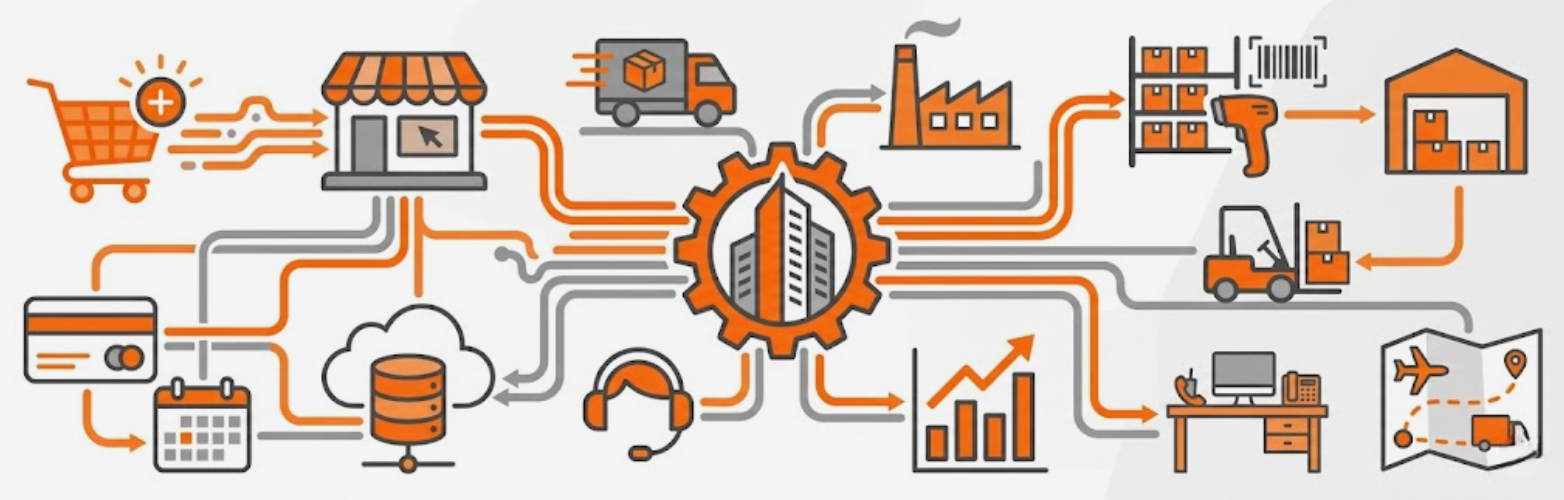
This is where a lot of projects become painful after launch.
The homepage may look great, yet the business struggles because:
- Stock levels sync late
- Orders fail to push into the ERP
- Returns are managed manually
- Customer data lives in silos
- Promo rules break in one system and not another
- Reporting becomes inconsistent across platforms
Good ecommerce website development services should map your operational stack before development starts.
That includes:
- ERP or stock systems
- CRM
- Email platform
- Reviews platform
- Search and filtering tools
- Payment gateways
- Delivery systems
- Feed tools
- Merchant Center
- Analytics and consent tools
The useful question here is not “Can you integrate with X?”
It is “How have you handled data flow, fallbacks, and failure points in similar setups?”
That answer tells you far more.
6. Measurement Planned Before Launch
A surprising number of ecommerce builds still launch with weak analytics, missing events, poor attribution, or no clear reporting model.
That creates two problems. First, you lose trust in the data. Second, you lose speed because every improvement decision becomes slower.
Ask what the agency includes for:
- GA4 ecommerce events
- Google Ads conversion tracking
- Consent mode setup where relevant
- Cross-domain tracking if external checkout or payment steps are involved
- Event testing
- Data layer planning
- UTM governance
- Post-launch validation against actual orders
This matters because a beautiful site with broken measurement makes optimisation harder than it should be.
A practical build partner should be ready to show how purchase, add_to_cart, begin_checkout, and payment-related steps will be validated before launch day.
7. Content Control for Your Internal Team
A store can feel great during handover and then become frustrating six weeks later.
That usually happens when:
- Landing pages are hard to build
- Merchandising blocks need code help
- Product badges need developer input
- Blog and content sections are inflexible
- Teams are scared to edit templates
- Search pages are impossible to customise
Good ecommerce website development services should reduce internal dependency, not increase it.
Ask for a live walk-through of how your team would:
- Add a landing page
- Create a new collection page
- Update key merchandising blocks
- Change homepage sections
- Schedule seasonal content
- Add FAQs or trust content
- Manage redirects
If everyday updates feel awkward in the demo, they will feel worse when your team is under pressure.
8. Headless Only When the Business Case Exists
Headless can be powerful. It can also be expensive, slower to maintain, and unnecessary for many stores.
Shopify’s enterprise guidance says headless can improve flexibility and cross-channel buying experiences, but it also brings more complexity and higher upfront and ongoing costs.
So ask:
- Why headless here?
- What exact problem does it solve?
- What can this setup do that a standard architecture cannot?
- Who will maintain it after launch?
- How will preview, publishing, QA, and rollback work?
- What happens when search, merchandising, and content teams need quick changes?
If the answer sounds like trend-following rather than commercial logic, step back.
9. A Post-Launch Plan, Not a Handover Email
Launch is not the finish line. It is the start of live trading.
Strong ecommerce website development services should include a post-launch plan covering:
- Bug triage
- Performance monitoring
- Search Console checks
- Merchant feed validation
- Conversion review
- Heatmap or behavioural review if used
- Backlog prioritisation
- Release process
- Ownership on both sides
The best partners already expect the first round of improvements. They do not act as though version one will be perfect.